

The Only Email Marketing Article You Will Ever Need To Run Your Business

You know that feeling when someone visits your website, reads one of your articles, checks out your services, maybe even thinks, “okay, this person actually knows what they’re talking about”…
And then they leave- gone, poof 😂
You have no idea if they’ll come back tomorrow, next week, or ever again.
This is one of the biggest problems with relying entirely on social media and website traffic. You can spend hours creating content, using AI in your digital marketing strategy to optimizing your website, posting on LinkedIn, Instagram, X, or wherever your audience happens to be, and still have no real way to continue the conversation with the people who were interested in what you had to say.
That’s where email marketing comes in.
An email list gives you something most social platforms don’t: a direct way to keep communicating with people who have already shown an interest in your business. But here’s where things get interesting.
Email marketing isn’t simply about collecting as many email addresses as possible and sending everyone a newsletter every Tuesday.
A good email marketing system should do something more useful. It should attract the right people, give them a reason to subscribe, deliver something valuable, build trust over time, and eventually guide them toward your products or services.
And the best part: you don’t have to manually do all of this every time someone discovers your business. You can build the system once, connect the pieces together, and let automation handle the repetitive work in the background.
That’s exactly what we’re going to build in this guide.
I’ll walk you through the core pieces of an email marketing system, from creating a reason for people to subscribe and setting up your email infrastructure to building landing pages, sending newsletters, and creating automated email sequences.
We’ll use MailerLite as the platform for the examples because it brings these pieces together in one place, and it’s what I actually use for my brand as well, but the bigger idea goes beyond any particular email marketing tool.

Start With the One Thing You Actually Want From Email Marketing
Before you open MailerLite, create a fancy popup, or write your first newsletter, there’s one question you need to answer: Why should someone give you their email address?
This sounds obvious, but it’s where a lot of businesses get it wrong. “Subscribe to our newsletter” isn’t exactly the most exciting offer in the world.
People already have overflowing inboxes, and they don’t need another email arriving every Friday just because your business decided Friday is newsletter day. 😅
You need to give them a reason. Maybe you’re offering a free guide that solves a specific problem. Maybe it’s a checklist, template, mini-course, discount, report, resource library, or something else that your target audience genuinely wants.
The important part is that the free resource should be connected to your business.
If you sell branding services, for example, giving away a random PDF about productivity might get you subscribers, but it probably won’t get you the right subscribers.
A better approach would be something like a free branding checklist, brand strategy guide, or mini-course that attracts people who are already interested in branding.
Your email list should be built around the audience you actually want to serve, not simply around collecting numbers.
That’s the difference between having a list and building an audience.
🎁 Want to Learn Branding for Free?
This is actually the approach I’ve taken with Saiiddesigns.
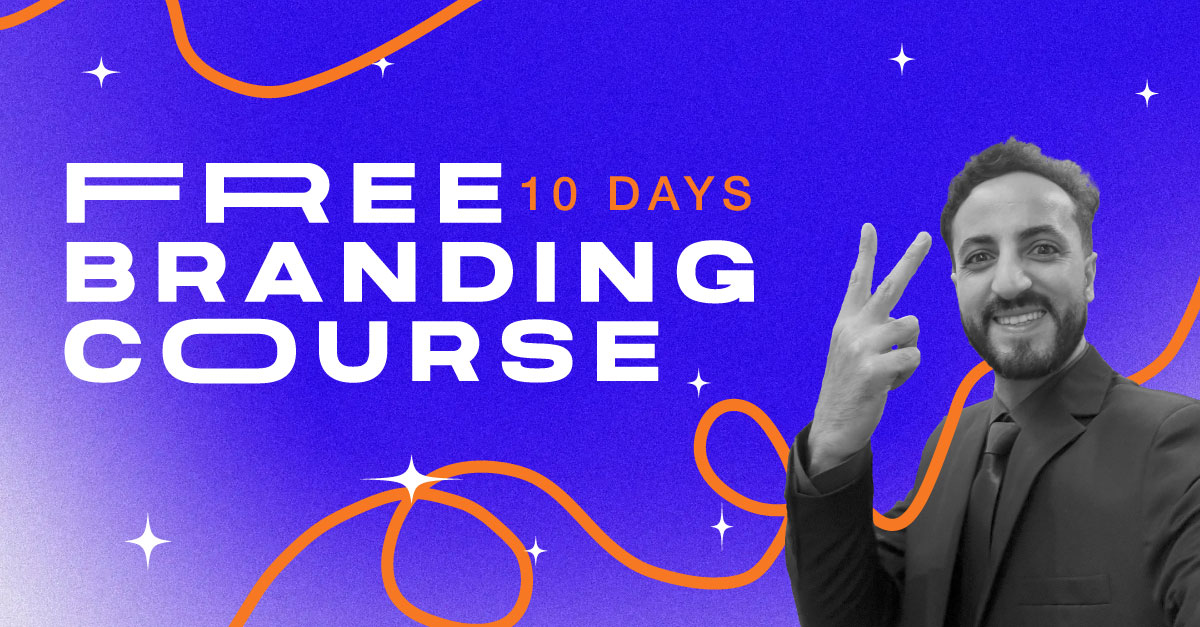
Instead of simply asking people to subscribe to my newsletter, I created a 10-Day Free Branding Course designed to give business owners practical branding lessons they can use to start improving their brand.
It’s completely free, and you can join it below.
Join the→ 10-Day Free Branding Course
The course also gives me something much more valuable than another email address. It allows me to build a relationship. Someone who signs up has already told me, in one way or another, “I’m interested in branding.”
Now I have an audience I can continue helping through useful emails, articles, resources, and eventually, when the time is right, my products or services.
And that’s the real purpose of email marketing. You’re not trying to collect emails. You’re building relationships with people who might eventually become customers.
Build Your Lead Magnet Before You Build Your Email List
Now that we know why someone should join your email list, we need to create the thing that actually gives them a reason to join. And this is where your lead magnet comes in.
A lead magnet is simply a free resource you offer in exchange for someone’s contact information. It could be an ebook, checklist, template, mini-course, webinar, discount, or anything else that gives your audience a useful result without asking them to pull out their wallet.
But don’t make the mistake of thinking free means throw something together quickly. Your lead magnet is often someone’s first real experience with your business.
If they download your “Ultimate Guide” and it turns out to be three pages of generic advice they could have found in a 30-second Google search, you’ve probably made a pretty bad first impression. 😂 Instead, your lead magnet should solve a specific problem for a specific audience.
- If you’re a personal trainer, you could create a beginner’s workout plan.
- If you’re a financial consultant, you could create a simple budgeting template.
- If you’re a designer, you could create a branding checklist or a guide to help businesses improve their visual identity.
The goal isn’t to give away everything you know. It’s to give someone a small but meaningful win.
And there’s another important detail: your lead magnet should make sense alongside what you actually sell.
Think about the journey:
Someone discovers your content because they have a problem. Your content helps them understand that problem. Your lead magnet gives them a practical next step. Your emails continue helping them. And eventually, your product or service becomes the natural next step when they’re ready for more help.
Because, when you've consistently delivered value, making an offer feels like a natural next step. As we discussed in how AI is changing small businesses forever, automated systems handle the delivery, allowing you to focus purely on high-ticket strategy.
That’s a much stronger funnel than simply putting a newsletter signup box on your website and hoping for the best.
Your Lead Magnet Is the Beginning of the Funnel
Once you have the right lead magnet, the rest of the system starts to make a lot more sense.
You can think about it like this:
Content → Lead Magnet → Landing Page/Form → Email List → Automated Emails → Offer
- Your content attracts the right people.
- Your lead magnet gives them a reason to take the next step.
- Your landing page or signup form collects their information.
- Your email system delivers the resource and starts building the relationship.
- Your automated sequence continues providing value.
And when the timing is right, you can introduce your product or service.
And notice something important here. The email isn’t the beginning. The relationship actually starts before someone ever gives you their email address.
That’s why your content, your positioning, your lead magnet, and your brand all matter. Someone needs to trust that what they’re about to receive will actually be worth giving up their inbox space for.
Once you understand that, the technology becomes much easier to figure out.

Set Up Your Email Infrastructure Properly
Once you have your lead magnet and know where you want your subscribers to go, it’s time to set up the machinery behind the scenes.
This is the part that isn’t particularly exciting, but trust me, you want to get it right before you start sending hundreds or thousands of emails.
The first step is choosing the email address you’ll actually use to communicate with your audience, and no, I’m not talking about sending your business newsletter from something like mybusiness123@gmail.com 😂
If you’re serious about building a business, having a professional email address connected to your own domain is a small detail that makes a big difference.
Something like: hello@yourbusiness.com or contact@yourbusiness.com looks much more professional than a generic personal email address, and it gives your business a consistent identity across your website, emails, and other communication.
I actually stumbled upon the best Email marketing genius that combined everything into one

You also want to authenticate your domain with your email marketing platform; this helps establish that you’re authorized to send emails from that domain and can improve your email deliverability.
MailerLite lets you connect and authenticate your sending domain directly from your account. Depending on where your domain is registered, this can be handled automatically or through a manual setup using your domain’s DNS settings.
Once that’s done, there’s another part of email marketing you shouldn’t ignore: permission.
Your subscribers should have actually agreed to receive marketing emails from you. That means you shouldn’t be buying random email lists, scraping addresses from the internet, or adding people just because you happen to have their email somewhere.
Besides being a terrible way to build a relationship, it can also create compliance and deliverability problems.
MailerLite’s setup process requires you to provide information about your business and how you collected your subscribers, and its anti-spam requirements include having permission from subscribers and providing an unsubscribe option in your emails.
There is also a physical business address requirement for marketing emails, which is part of complying with anti-spam regulations.
In other words, don’t think of this as annoying paperwork standing between you and your first newsletter. This is the foundation of a healthy email list.
You want people on your list because they want to hear from you, and that’s a very different audience from a list you’ve built by throwing every email address you can find into a spreadsheet.
What If You Already Have an Email List?
If you’re moving from another email marketing platform, you don’t necessarily need to start from zero.
MailerLite allows you to import existing subscribers using a CSV or text file, copy and paste contacts, add them manually, or import contacts from supported platforms. During the import process, you can match information such as email addresses and names to the appropriate subscriber fields.
This is especially useful if you’ve already spent years building an audience somewhere else and simply want to move your email marketing system to a different platform.
Just remember one thing:
Moving a list doesn’t mean you suddenly have permission to email people who never agreed to receive your emails.
The quality of your list matters far more than the number sitting beside the word “subscribers.”
Once your sending domain is ready and your contacts are organized, we can finally start thinking about what happens to those subscribers after they enter your system.
And this is where things get interesting, because having 500 people on your list is one thing; knowing who those 500 people are and being able to communicate with the right ones is another.

Get Your Subscribers Into the Right Places
So you’ve set up your email address, connected your domain, and you’ve got your first subscribers coming in. Now what?
You could just throw everyone into one giant list and send the same email to everybody forever. Well, technically, you could, but as your audience grows, that gets messy very quickly.
Someone who downloaded your free branding course isn’t necessarily in the same stage as someone who already bought one of your products. Someone who joined through your website might have completely different interests from someone who discovered you through YouTube.
This is why organizing your subscribers matters.
MailerLite gives you two useful ways to do this: groups and segments. And while they might sound like the same thing at first, they serve different purposes.
Think of groups as folders for your subscribers; you can use them to organize people based on where they came from, what they signed up for, or what relationship they have with your business.
For example, you could have:
- Website Subscribers
- YouTube Subscribers
- Free Branding Course
- Product Customers
- Brand Audit Leads
Someone who signs up for your free branding course could automatically be added to the Free Branding Course group, while someone who joins through your website could go into Website Subscribers. And someone who purchases one of your products could be added to a Customers group.
This gives you a simple way to understand where people are coming from and what they’ve interacted with.
MailerLite allows you to create these groups and assign subscribers to them when importing contacts or through your signup forms and automations. But groups are only part of the story.
Segments Are Where Things Get Interesting
Segments allow you to create dynamic audiences based on specific information or behavior.
For example, imagine you have a group containing everyone who subscribed through your YouTube channel. You might want to send an email only to the people in that group who live in the United States. Instead of manually going through hundreds of subscribers and figuring out who meets those criteria, you can create a segment with those conditions.
MailerLite’s segmentation system can filter subscribers using conditions such as their group membership and location, creating an audience that updates based on those criteria.
And this becomes even more useful when you start looking at behavior.
- Did someone click a link in your email?
- Did they interact with a particular campaign?
- Did they join a specific group?
These kinds of signals can help you understand what your audience is actually interested in. Just Don’t Overcomplicate it.
Now, here’s where I want to make something very clear: you don’t need 47 different groups and a segmentation system so complicated that you need a spreadsheet to understand your spreadsheet, especially when you’re just starting out.
You could begin with something incredibly simple:
Subscribers → Leads → Customers
Then add more groups as your business grows, and you have a genuine reason to separate people. The goal isn’t to organize people for the sake of organizing people. The goal is to send the right message to the right audience. And that becomes incredibly important when you start sending emails, because your next email might be perfect for someone who just discovered your business. But sending that same email to someone who’s already purchased from you? Not so much.
That’s when segmentation stops being a technical feature and starts becoming a marketing strategy. And now that our subscribers are organized, we’re ready for the fun part

Create Emails People Actually Want to Open
Now we get to the part of email marketing that actually feels like marketing: you have your lead magnet. Your subscribers are organized, your infrastructure is working, but none of that matters if you send emails that make people think:
“Oh look, another newsletter…” 😴
The goal isn’t simply to send emails consistently; the goal is to give people a reason to want to hear from you, and that starts with understanding what makes an email worth opening in the first place. Don’t Treat Every Email Like a Sales Pitch
One of the easiest ways to kill an email list is to make every email about you.
- “Buy this.”
- “Book this.”
- “Check out our new product.”
- “Here’s another discount.”
Eventually, people stop opening your emails because they know exactly what’s waiting for them on the other side. Instead, think about your emails as an extension of the value you’ve already been providing through your content.
If someone subscribed because you helped them understand branding, keep helping them understand branding. And if they subscribed because you teach them how to grow their business, keep giving them useful ideas they can actually apply.
Your emails should feel like the next chapter of the conversation, not an interruption.
That doesn’t mean you can never sell; of course you can- you’re running a business, not a charity. 😂 But the relationship should come first.
Give Every Email a Job:
Before writing an email, ask yourself:
- “What do I want this email to accomplish?”
- Maybe you want to teach something.
- Maybe you want to share a new article.
- Maybe you want to introduce a product.
- Maybe you want subscribers to click through to your website.
- Maybe you simply want to start a conversation.
- Whatever the goal is, make it clear.
One email doesn’t need to accomplish seventeen different things.
If your newsletter starts with a branding lesson, suddenly becomes a personal story, promotes three affiliate products, links to five blog posts, announces a discount, and finishes with a survey… Congratulations, you’ve created an email buffet. 😂
And nobody knows what they’re supposed to do next.
Keep the main action clear, and your Subject Line Gets You Through the Door. But before someone reads your brilliant email, they need to open it, that means your subject line matters.
You don’t need to use clickbait or write something that sounds like a Nigerian prince discovered your business opportunity. 😅 Instead, create curiosity around something your audience actually cares about.
Compare:
“Our Latest Newsletter”
with:
“Your website might be losing customers for this reason”
The second one creates a reason to open, but there’s another important detail here: deliver on the promise. If your subject line creates curiosity but the email doesn’t deliver, people may open it once. They won’t necessarily open the next ten; trust is built one email at a time.
Make Your Emails Sound Human:
This is probably one of the biggest advantages small businesses have. You don’t need to sound like a giant corporation; you can sound like a person:
- Tell a story.
- Share something you learned.
- Explain a mistake you made.
- Give your opinion.
- Show someone how you solved a problem.
- And don’t be afraid to let your personality show.
That’s one of the reasons I approach the Saiiddesigns newsletter the same way I approach my content. I don’t want every email to feel like marketing; I want it to feel like someone useful showed up in your inbox.
Use Personalization Where It Actually Helps:
Most email platforms let you personalize messages using information such as a subscriber’s name; that’s useful, but don’t confuse personalization with simply writing:
“Hey John!” at the beginning of every email. Real personalization is about making the message more relevant to the person receiving it.
For example, if you know someone joined your list because they downloaded a branding resource, you can send them content related to branding.
If someone purchased a product, you might send them useful information about getting more value from it rather than continuing to treat them like a brand-new subscriber.
And this is where the organization we built earlier becomes useful. Your subscriber data should help you create a better experience, not just give you more fields to fill in.
Test, Learn, Improve:
You also don’t have to guess whether your emails are working. MailerLite’s campaign reporting lets you see metrics such as opens, clicks, and click-to-open rates, giving you a clearer picture of how subscribers are interacting with your emails.
That means you can start learning from your audience:
- Maybe your educational emails get lots of clicks, but your promotional emails don’t.
- Maybe certain topics consistently perform better.
- Maybe changing your subject lines improves your open rate.
You don’t need to obsess over every percentage; just pay attention to patterns, and over time, those patterns tell you what your audience actually wants, and that’s much more valuable than blindly following some random “BEST EMAIL SUBJECT LINES OF 2026” blog post. 😂
Because your audience is unique, let their behavior teach you how to communicate with them. And once you have emails people actually want to receive, there’s only one problem left:

Give People a Simple Way to Join Your List
Okay, we’ve reached the point where the system needs an entrance. 😅
You’ve created something worth signing up for, you’ve set up your email infrastructure, you’ve organized your subscribers, and you’ve even figured out how to write emails people might actually want to open.
Now you need to make it ridiculously easy for the right people to join. This is where signup forms come in.
A signup form is simply the bridge between your audience and your email list. Someone discovers your content, sees your offer, decides “Yep, I want that,” enters their details, and gets added to your email system.
Simple.
But there are a few things worth thinking about before you start throwing forms onto every corner of your website.
Put the Form Where People Already Have Attention
You don’t need a signup form on every pixel of your website; you need it where it makes sense.
For example, you could place one:
- At the end of a blog post
- Inside a relevant article
- On your homepage
- In your website’s sidebar
- As a popup
- On a dedicated landing page
- Inside content where the offer is directly relevant
The important part is context. Imagine someone just finished reading an article about building a personal brand. Right underneath it, you offer: “Get the Free Personal Branding Checklist.” That’s a natural next step.
Compare that with a random pop-up appearing three seconds after someone lands on your homepage screaming: “SUBSCRIBE TO OUR NEWSLETTER!!!” Yeah… I’m closing that tab. 😂
Don’t Ask for Everything:
Here’s another common mistake: you create a signup form and ask for:
- Name
- Company
- Job title
- Industry
- Company size
- Phone number
- Favorite color
- Blood type 😂
Okay, maybe not the last one, but you get the idea: The more information you ask for, the more friction you introduce.
If all you need to deliver your lead magnet is someone’s email address, just ask for the email address. You can always collect additional information later when there’s a genuine reason to do so. Your goal at this stage is simple: Make the next step easy.
Give People a Clear Expectation:
Your signup form should also make it obvious what happens after someone submits it.
· If they’re signing up for a free branding course, tell them that.
· If they’re getting a checklist, say that.
· If they’re joining your newsletter, explain roughly what they’ll receive.
Don’t make people wonder: “Okay… what exactly did I just sign up for?”
And remember, you’re asking someone to give you access to one of the most personal places on the internet: their inbox; treat that access as it matters.
Different Forms for Different Situations:
MailerLite gives you several ways to collect subscribers, including popup forms, embedded forms, and other signup options.
You can customize the form, choose the fields you want to collect, control what happens after someone subscribes, and configure options such as double opt-in.
This means you don’t have to build one giant universal signup form and hope it works everywhere. You can create different entry points depending on what you’re offering.
For example:
- Blog post → Free guide → Relevant signup form
- YouTube video → Free resource → Signup form
- Homepage → Newsletter → Signup form
- Social media → Free course → Landing page → Signup form
All of these can feed into the same overall email system while giving people a more relevant experience, and that’s really the key.
Your signup form shouldn’t just collect an email. It should continue the conversation that started before the form.
Someone shouldn’t go from:
“Here’s an article about branding…”
to:
“JOIN MY NEWSLETTER.”
There should be a logical bridge between the two.
Your Signup Form Is Part of Your Brand:
This is especially important if you’re a designer, creative, consultant, or personal brand. Your signup form shouldn’t feel like it came from a completely different business. Your colors, typography, messaging, tone, imagery, and overall experience should feel consistent with everything else you’re doing.
Because branding isn’t just your logo sitting at the top of your website. Every interaction is part of the brand experience.
- The form someone fills out.
- The confirmation message they receive.
- The email that lands in their inbox.
- The resource they download.
- All of it contributes to how they perceive your business.
And once someone actually submits that form, the next question becomes: Where do they land?
Because sometimes a small signup form is enough. Other times, especially when you’re promoting a dedicated lead magnet, you need an entire page built around one specific action.
Build a Landing Page That Has One Job
Now we’re getting somewhere. Your signup forms are ready, your lead magnet exists, and you’ve created multiple ways for people to discover it, but sometimes a little form tucked underneath a blog post isn’t enough. Sometimes you need to give your offer the full spotlight, and that’s where a landing page comes in.
A landing page is a page designed around one specific goal. In our case, that goal is usually getting someone to sign up for your lead magnet. And there’s one rule I want you to remember:
- One page.
- One offer.
- One main action.
Don’t Make People Figure Out What You Want:
One of the biggest mistakes I see on business websites is trying to make a single page do everything. You land on the page and there’s a navigation menu, five different services, three blog posts, social media links, testimonials, an about section, a product promotion, and somewhere near the bottom there’s a tiny button saying:
“Get the Free Guide.”
By the time someone finds it, they’ve already forgotten why they came there. 😂A dedicated landing page removes that problem:
- If you’re offering a free branding checklist, the page should be about that checklist.
- If you’re offering a free course, the page should be about that course.
- Everything on the page should support the decision to take that action.
Start With the Problem:
Don’t start your landing page by talking about yourself.
- Start with the person you’re trying to help.
- What problem are they experiencing?
- What are they struggling with?
- What result do they want?
- Then position your lead magnet as a simple next step.
For example, instead of:
Download My Free Branding PDF; you could say something more useful:
Not Sure Why Your Brand Doesn’t Feel Consistent? Then explain what the resource helps them understand or accomplish. The visitor should be able to answer three questions almost immediately:
- What is this?
- Why should I care?
- What do I need to do next?
If they have to scroll through half the page to figure that out, you’ve already made the job harder than it needs to be.
Show Them What They’re Getting:
Your lead magnet is free, but that doesn’t mean you shouldn’t sell the value of it. Show people what they’ll actually receive.
- If it’s a checklist, show a preview.
- If it’s a guide, show a few pages.
- If it’s a course, explain what they’ll learn.
- If it’s a template, show them how it works.
You’re reducing uncertainty; the visitor shouldn’t have to take a leap of faith; make the value visible.
Keep the CTA Simple:
Your call to action should be obvious.
Not:
“Click here to proceed.”
Not:
“Submit.”
And definitely not:
“Learn More.”
Tell people what they’re getting:
- Get the Free Branding Course
- Download the Free Checklist
- Send Me the Template
Simple. Clear. No detective work required.
Your Landing Page Doesn’t Need to Be Complicated
MailerLite includes landing page tools that let you start from a template or build a page from scratch, add signup forms, customize the success page, and configure things such as the page URL and SEO settings. That’s useful because you don’t necessarily need to build a separate website just to create a landing page for one campaign.
You can create a focused page, connect the signup form to your email system, and let the rest of your funnel take over. And that’s the bigger point.
The landing page isn’t the funnel. It’s one piece of the funnel.
- Someone discovers your content.
- They click your offer.
- They arrive on the landing page.
- They understand the value.
- They sign up.
- And then… the email system takes over.
Don’t Obsess Over Perfection:
Here’s something else worth remembering. Your first landing page probably won’t be perfect, and that’s fine. You can:
- Improve the headline.
- Test a different CTA.
- Change the layout.
- Improve the explanation.
- Add social proof when you have it.
- Remove sections that aren’t helping.
The goal isn’t to spend three weeks designing the world’s most beautiful landing page before you’ve collected your first subscriber. It’s to get the system working first, then optimize it. Because once people start signing up, you have something incredibly valuable: real data.
And now we can finally connect everything we’ve built so far.
- Someone signs up…
- The system delivers the resource…
- And instead of you manually sending the next email to every new subscriber…

Automate the Follow-Up
Imagine someone discovers your brand at 2:17 AM; they find your free resource, sign up, and become a subscriber. You could manually notice the signup, copy their email somewhere, remember to send them the resource, wait a day, send another email, then remember to follow up again… Yeah, we’re not doing that. 😂 That’s exactly what automation is for.
Your First Email Should Happen Automatically:
The moment someone joins your list, something should happen.
- Maybe they receive the lead magnet they requested.
- Maybe they get a welcome email.
- Maybe they enter a short educational sequence.
Whatever you’ve designed for your funnel, the important thing is that the next step happens without you having to press a button every time someone subscribes.
MailerLite’s automation system lets you create workflows based on triggers such as someone joining a particular group. From there, you can send emails, add delays between messages, and create different paths based on how subscribers interact with those emails.
So, for example, your system could look like this:
Someone joins your Free Branding Course
↓
Welcome email
↓
Deliver Day 1
↓
Wait 1 day
↓
Send Day 2
↓
Wait 1 day
↓
Send Day 3
And so on. You build the workflow once, then every new subscriber can move through it automatically, and that’s the beauty of automation, my friend.
Automation Should Feel Like a Conversation:
Here’s the part people sometimes get wrong. Automation doesn’t mean your emails should feel automated; there’s a big difference.
You don’t want someone receiving:
“Dear valued subscriber, your automated communication sequence has now progressed to Stage 4.” Please don’t; instead, write your automated emails the same way you’d write an email to an actual person.
- Teach them something.
- Tell them a story.
- Give them an exercise.
- Share an example.
- Ask them a question.
Make the sequence feel like you’re guiding someone through a journey, rather than dumping a pile of scheduled emails into their inbox.
For example, if someone joins my 10-day branding course, each email should naturally lead into the next lesson.
- Day 1 gives them a foundation.
- Day 2 builds on it.
- Day 3 introduces another concept.
- By Day 10, they’ve gone from “I don’t really understand my brand” to having a much clearer understanding of what they need to improve.
Use Behavior to Make the Journey Smarter:
Once you’re comfortable with basic automation, you can start making your workflows more responsive. For example:
- Someone opens an email; maybe they continue down one path.
- Someone clicks a particular link; maybe you send them something more closely related to that topic.
- Someone doesn’t engage; maybe you give them some space before sending anything else.
MailerLite’s automation builder can use conditions and branches based on subscriber behavior, including interactions such as opening or clicking emails.
You’re no longer sending the exact same journey to everyone; you’re responding to what people actually do. But… There’s a trap here, and it’s a big one.
Don’t Build a Monster Automation:
Just because you can create a ridiculously complicated automation doesn’t mean you should.
You could create dozens of branches, conditions, tags, delays, campaigns, and different subscriber paths, and before you know it, you’ve built an automation so complicated that even you don’t know what happens when someone clicks a button. 😂
Especially when you’re starting out, keep it simple.
A basic system might be enough:
Signup → Welcome → Deliver Value → Educate → Offer
That’s it.
You can make it smarter later when you have enough subscribers and enough data to justify the complexity, and remember, the goal of automation isn’t to create the most impressive workflow. It’s to create a better experience while saving you time.
Build It Once. Improve It Over Time:
Imagine having 10 people join your list this month, then 100, then 1,000.
If you’re manually sending every welcome email and every follow-up, your workload grows with your audience. But if the core journey is automated, the system can keep doing the repetitive work while you focus on creating better content, products, services, and experiences.
And that’s exactly what we want from the larger email marketing system.
- Your content attracts people.
- Your lead magnet gives them a reason to subscribe.
- Your signup forms and landing pages capture them.
- Your automation starts the relationship.
And then your regular emails keep that relationship alive. Which brings us to the bigger question…

Turn Your Email List Into a Business Asset
Once you have people on your list, how do you actually turn that audience into a business asset without constantly screaming “BUY NOW!”?
Now we’ve built most of the machinery:
- People discover your content.
- They download your lead magnet.
- They join your list.
- They receive your automated sequence.
So… what happens next?
This is where email marketing stops being just a communication channel and starts becoming a business asset. Because the point of building an email list isn’t to brag about having 2,000 subscribers.
The point is having a group of people who already know who you are, understand what you do, and have given you permission to continue the conversation.
Don’t Sell to Everyone, All the Time:
Your email list shouldn’t become a never-ending sales funnel, because if every email eventually ends with: “BUY MY PRODUCT.”People will eventually stop listening.
Instead, think about your emails as having different roles:
- Some emails teach.
- Some inspire.
- Some tell stories.
- Some share useful resources.
- Some introduce an offer.
And occasionally, some can simply say:
“Hey, I found something interesting and thought you’d like it.” That variety keeps your emails from feeling predictable.
And when you do have something worth selling, your audience is much more receptive because you’ve spent time giving value before asking for something in return.
Your Products Should Feel Like the Next Step:
Imagine someone downloads your free branding checklist; you help them identify the biggest problems with their brand, then your emails teach them how to fix those problems.
Eventually, they realize:
“Okay… I understand what I need to do, but I don’t have the time or skills to do all of this myself.”
Now your branding service isn’t some random advertisement appearing in their inbox; it’s a logical next step.
The same thing works for digital products:
- Give someone a useful free resource.
- Help them get a result.
- Then introduce a paid resource that helps them go further.
You’re not forcing the sale; you’re basically showing them where they can go next.
Your Email List Gives You More Than Sales:
This is something I think gets overlooked a lot, your subscribers can also help you understand your business better.
- What topics get the most clicks?
- Which resources get the most signups?
- What questions keep appearing in replies?
- Which products generate interest?
- What do people actually need help with?
Your audience is giving you signals all the time.
For example, if you consistently send emails about branding and people keep replying with questions about positioning, that’s useful information.
- Maybe there’s a blog post hiding in that question.
- Maybe there’s a product.
- Maybe there’s a service.
- Maybe there’s an entire new content series.
Your email list can become a research channel, not just a marketing channel.
Think Long-Term:
- Social media can give you reach.
- Search can give you traffic.
- Your website can give you a home base.
But your email list gives you something different: A continuity.
Someone can discover you today and still be hearing from you six months from now; they might not need your service today. They might not be ready to buy your product today, and that’s okay; business isn’t always about getting someone to buy immediately.
Sometimes it’s about being the person they remember when the problem eventually becomes important enough to solve. And that’s why building an email list is a long-term play.
You’re building an audience you can continue to serve regardless of what happens to the algorithm.
The Bigger System:
At this point, let’s zoom out for a second; we’ve gone from a simple idea:
“I should probably start collecting emails.” to an actual system:
Content
↓
Lead Magnet
↓
Signup Form / Landing Page
↓
Email List
↓
Automation
↓
Useful Emails
↓
Products & Services
And the beautiful thing is that each piece supports the next.
- Your content attracts attention.
- Your lead magnet captures interest.
- Your landing page converts that interest into a subscriber.
- Your automation welcomes them.
- Your emails build trust.
- Your offers create revenue.
That’s a system, and it’s exactly what I am building with Saiiddesigns and what I am helping my client with. You can book me Here.
Once you have that system working, you can keep improving each part instead of constantly starting from zero, which brings us to the tool that can bring many of these pieces together: MailerLite.

Where MailerLite Fits Into the System
Now we’ve built the strategy; we’ve talked about the lead magnet, the signup forms, landing pages, subscriber organization, useful emails, and automation.
So where does MailerLite actually fit into all of this?
Think of it as the infrastructure that connects the pieces. The important distinction is this:
MailerLite isn’t your email marketing strategy; it’s the platform you can use to build and manage the system, and that’s an important distinction because switching email platforms won’t magically fix a weak funnel.
If your lead magnet is irrelevant, your emails are boring, and your offer doesn’t make sense, no software is going to save you. 😂But if you’ve already got a good strategy, then that’s where a platform like MailerLite becomes really useful
One Place to Build the System:
MailerLite brings several of the components we’ve discussed together. You can manage your subscribers, organize them into groups, create segments, build signup forms, create landing pages, send campaigns, and build automated workflows.
That means you’re not necessarily stitching together five different tools just to get someone from “I found your Instagram post” to “I’m now on your email list.” You can build a lot of that journey inside the same ecosystem.
For a small business, creator, freelancer, or personal brand, simplicity matters, because the last thing you need is to spend more time maintaining your marketing stack than actually marketing your business.
Campaigns Handle Your Regular Emails:
When you want to send a newsletter, announcement, educational email, or promotional campaign, you can create a regular campaign inside MailerLite. You can define things such as your subject line, preheader, sender information, and recipients, then build the email using the available editor, templates, or HTML.
You can also personalize emails and send yourself a test before sending the campaign to your audience. That makes the process relatively straightforward:
Write → Review → Test → Send → Analyze
And then you learn from what happened.
Forms and Landing Pages Capture the Leads:
We’ve already talked about why signup forms and landing pages matter, and MailerLite gives you both:
1. You can create different types of signup forms, customize the fields and signup experience, and connect those forms to the groups you’ve created.
2. You can also build dedicated landing pages around specific offers and connect the signup process directly to your email system.
So instead of thinking:
“I need an email platform, a form builder, a landing page builder, and an automation tool…”
you can think about the entire subscriber journey first and then use the platform to implement it. That’s a much healthier way to choose software.
Automation Handles the Repetitive Work:
Then there’s the part we’ve already seen: automation:
- Someone joins a group.
- That triggers a workflow.
- They receive an email.
- A delay happens.
- Another email goes out.
- Maybe they click something and take a different path.
All of that can happen without you manually checking your subscriber list every morning, and that’s where the real time-saving potential comes from.
You’re automating the repetitive parts so you can spend more time doing the work that actually requires you:
- Creating.
- Thinking.
- Selling.
- Building relationships.
- Improving your products.
- Running the business.
Don’t Choose a Tool Because Everyone Else Uses It:
This is probably the most important thing I can say about MailerLite, or any other marketing platform. Don’t start with the tool. Start with the system.
Figure out:
- Who are you trying to attract?
- What are you offering them?
- Why should they subscribe?
- What happens after they subscribe?
- What emails will they receive?
- What are you eventually selling?
Then choose the software that can support that process.
For my own setup, MailerLite fits because I wanted the email list, lead magnet, forms, landing pages, campaigns, and automation to work together without turning my marketing stack into a science experiment. 😂
And that’s really the value of a platform like this, not that it magically generates customers. But that it gives you the infrastructure to build the machine.
If you want to explore MailerLite yourself, you can check it out here:
Try MailerLite → JOIN HERE FOR A 50% OFF
And if you’re eligible for the current offer, you can also use the code GoLite50 for 50% off your first month on the eligible monthly Comfort and Power plans.
But remember:
The software is the easy part. The strategy comes first, and once the system is running, there’s one more thing you need to do: Figure out whether it’s actually working, because “I sent an email” isn’t a business metric.

Measure What Actually Matters
Alright. We built the machine; now we need to do something that a lot of businesses conveniently forget: Check whether the damn thing is working. 😂 Because sending emails feels productive, watching the subscriber count go up feels productive. Seeing “Campaign sent successfully” feels VERY productive, but none of those things automatically mean your email marketing is doing its job.
You need to look at what happens after you hit send. Don’t Obsess Over One Number; email platforms give you a lot of data, such as:
- Open rates.
- Click rates.
- Unsubscribes.
- Subscriber growth.
- Campaign performance.
And yes, it’s tempting to stare at the numbers after every email like you’re watching the stock market. 😂 Don’t, because one email doesn’t tell you much. Instead, look for patterns over time.
If one email gets a lower open rate than usual, that’s not necessarily a disaster; maybe the subject line wasn’t great, maybe you sent it at a different time, maybe the topic wasn’t particularly interesting. Or maybe everyone was busy doing literally anything other than checking their inbox.
It happens a lot; the useful question is: “What can I learn from this?”
Start With the Basics:
There are a few metrics worth paying attention to:
- Open rate can give you an indication of how effectively your subject line and sender information are getting attention.
- Click rate tells you whether people are actually taking action inside the email.
- Click-to-open rate can help you understand how engaging the email was among the people who opened it.
MailerLite provides campaign reporting around metrics such as received emails, opens, clicks, and click-to-open rates. However, don’t treat these numbers as grades; they’re signals, and signals are useful because they help you make better decisions.
Look Beyond Opens:
Here’s something important: an email getting lots of opens doesn’t necessarily mean it was successful. Imagine you send:
“You won’t believe what I discovered…”
Everyone opens it, fantastic, right? Then nobody clicks, nobody replies, nobody downloads anything, and nobody takes the next step.
You may have written a great curiosity-driven subject line, but you didn’t necessarily create a great email.
On the other hand, an email might have fewer opens but generate significantly more clicks, replies, or sales. The goal isn’t to win the open-rate Olympics; the goal is to move the right people toward the right outcome. Instead of constantly asking for a sale, focus on building trust. This is the core of building a strong personal brand identity sharing your perspective so people recognize your authority before you ever pitch.
Connect Your Email Metrics to Your Business:
This is where things get really interesting.
Don’t just ask:
“How many people opened my email?”
Ask:
“Did this email help my business?”
- If you’re promoting a blog post, look at the traffic it generated.
- If you’re promoting a free resource, look at the signups.
- If you’re selling a product, look at purchases.
- If you’re trying to start conversations, look at replies.
- If you’re nurturing potential clients, look at whether those subscribers eventually become leads.
That’s how you connect email marketing to the actual business, because ultimately, your email list isn’t the business. It’s an asset that should support the business.
Use Data to Improve the System:
Let’s say you notice that your educational emails consistently get more clicks than your promotional emails; that’s useful. Maybe your audience responds better when you teach first and sell second, so you create more educational content.
Or perhaps you notice that people who download your branding course frequently click links about visual identity. Now you have a clue about what they’re interested in.
- Maybe you create more content around that topic.
- Maybe you develop a product.
- Maybe you create a service around it.
The numbers aren’t just telling you whether your email performed; they’re helping you understand your audience, and that information can influence the rest of your marketing.
Don’t Be Afraid to Change Things:
- Your first version of the system won’t be perfect.
- Your landing page can improve.
- Your lead magnet can improve.
- Your subject lines can improve.
- Your emails can improve.
- Your automation can improve.
That’s normal. Think of your email system as something you build, observe, and refine. You don’t need to completely rebuild everything every week.
Make one meaningful improvement at a time, test it, watch what happens, keep what works, change what doesn’t, then repeat. That’s how a simple email list gradually becomes a real marketing asset.
The Real Metric:
And honestly? There’s one metric I care about more than any dashboard number:
Are you building a relationship with the right people?
Because you can have 50,000 subscribers and barely any meaningful business from them. Or you can have 1,000 people who genuinely care about what you do, read your emails, click your content, reply to you, buy your products, recommend you, and eventually become long-term customers.
I’ll take the second one every single time.
Quality beats vanity:
And that’s really the philosophy behind the entire system we’ve built:
- Attract the right people.
- Give them something valuable.
- Earn their attention.
- Keep helping them.
- Make relevant offers.
- Pay attention to what they tell you.
- Then improve the system.
You don’t need a million subscribers; you only need the right people, the right message, and a system that keeps the relationship moving.
And now we’ve reached the end of the build.

Build the System Once. Then Keep Improving It.
If you’ve made it this far, you probably noticed something: Email marketing isn’t really about email; it’s about building a system that turns attention into relationships.
- Someone discovers your content.
- They become interested.
- You give them a useful reason to subscribe.
- They join your list.
- Your system delivers the resource.
- Your emails continue helping them.
- Over time, they start to trust you.
And when they eventually need the product or service you offer, you’re no longer a stranger appearing in their inbox. You’re someone they already know, and that’s the real value of email marketing.
You Don’t Need a Complicated Funnel:
You don’t need 37 automations, twelve lead magnets, a giant CRM, and enough tags to make your subscriber database look like a NASA launch system. 😂
Start simple:
- Build one useful lead magnet.
- Create one clear signup path.
- Write one valuable welcome sequence.
- Send useful emails consistently.
Then connect your relevant products or services to the journey, and once that’s working, improve it.
- Maybe your landing page needs a better headline.
- Maybe your lead magnet needs updating.
- Maybe your emails need stronger calls to action.
- Maybe your audience is telling you they want something completely different.
Your Audience Is an Asset:
Social platforms will continue changing, algorithms will change, trends will change, new platforms will appear, some will disappear and your website traffic will fluctuate.
But if you’ve built a genuine relationship with an audience that has willingly joined your email list, you have something much more durable. You have a direct line to people who have already said: “I’m interested in what you do.”
Don’t take that for granted; respect their inbox. Give people something truly useful that highlights your unique perspective. Leveraging brand storytelling as your secret weapon inside your free resources is what transforms a simple download into a memorable brand experience.
That’s how you build an email list that actually means something.
Start Small:
You don’t need 10,000 subscribers to start; you don’t even need 1,000. You can start with 10 people, help those 10 people, then 50, then 100.
Your first automation might be basic, your first landing page might be ugly, your first newsletter might make you cringe six months later. 😂 And that’s okay; I have been there.
You’re not building the finished machine on day one; you’re building the first version. And then you make it better; that’s exactly how I approach the Saiiddesigns system too.
- Content brings people in.
- Useful resources give them a reason to stay.
- Email lets me continue the conversation. Products and services give people a way to go deeper when they’re ready.
- The technology supports that process.
But the relationship is the business; in other words, content brings people in, but your overarching brand system gives them direction. This holistic approach is essential for escaping the niche trap and building an audience around your perspective rather than a narrow skill.
And if you build that relationship properly, your email list becomes much more than a collection of addresses:
- It becomes an audience.
- A research channel.
- A distribution channel.
- A sales channel.
- And most importantly, an asset you actually own.
So don’t wait until your business is “big enough” to start building your email system; build it now. Start small, keep it simple, keep helping people, then let the system grow with you.
Build the system once, keep improving it, and let your future customers find their way through it.

Want to Start Building Yours?
If you’re ready to put this into practice, MailerLite can give you the infrastructure to build the system we’ve just covered, from signup forms and landing pages to campaigns, subscriber management, and automation.
You can start simple and expand as your business grows.
Try MailerLite → JOIN HERE FOR A 50% OFF
And if you’re starting with a small audience, that’s perfectly fine; you don’t need a huge list; you just need to start building one.
Your future customers are probably already out there. Now give them a way to stay.
I’ve spent a lot of time figuring out how to connect branding, positioning, content, and digital marketing into something that actually works together, and that’s also the system I’ve been building for Saiiddesigns.
If you want help figuring out where your brand is today, where it needs to go, and what you should actually be doing to get there, book a Brand Discovery Call with me.
We’ll look at your positioning, messaging, audience, content, and the bigger picture of your brand, then identify where the real opportunities are.

👉 BOOK YOUR BRAND DISCOVERY CALL it’s free… For now 😉
For more Branding, Marketing, Motion, and Storytelling, you are already in the right place
Written by: Saiid of @saiiddesigns


.svg)