

How AI is Changing Small Businesses Forever

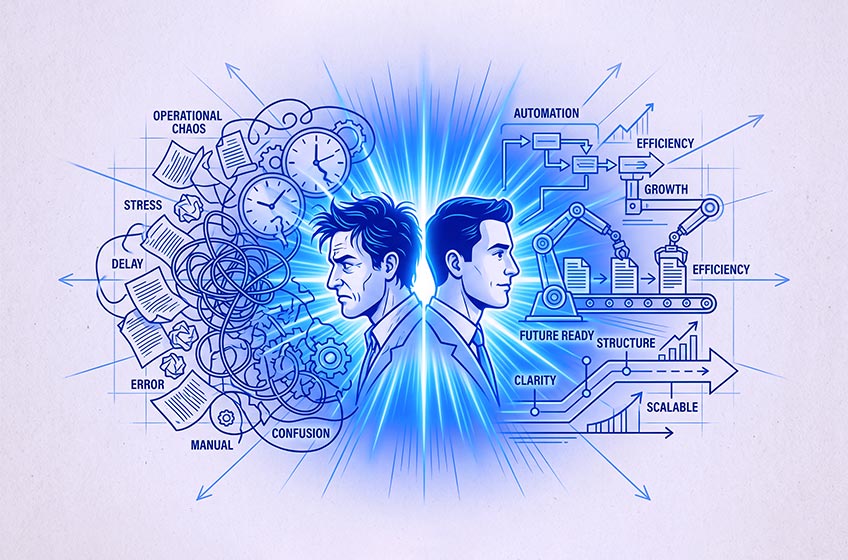
Let me paint you a picture: it's 1 AM, a client is waiting for final revisions, you have a meeting in the morning, your inbox is a mess, three different versions of the same file are sitting on your computer, and somewhere between answering emails and updating spreadsheets, you've forgotten what you were actually supposed to be working on.
Sound familiar?
This is one of the biggest problems small businesses face, not a lack of ambition and not even necessarily a lack of customers.
It's operational chaos.
When you're running a small business, you're the marketer, salesperson, project manager, customer support, accountant, designer, and sometimes the person making coffee 🥲
At first, doing everything yourself feels like hustle; eventually, it becomes a bottleneck, and here's the uncomfortable part: You can become so busy working on the business that you stop actually building it.
That's when they started experimenting with AI to organize meeting notes, connect ideas with schedules, automate reports, and handle routine client updates.
The result?
Around 12 hours of work saved every week. That number matters, not because 12 hours magically turns your business into a million-dollar company; it matters because those 12 hours can go somewhere far more valuable.
- Strategy.
- Creative work.
- Sales.
- Relationships.
Or, God forbid, actually having a life. 😂
AI isn't the business strategy:
This is where I think a lot of small businesses get it wrong: they see AI and immediately ask: "What tool should I use?" Wrong question; the better question is: "Where is my business wasting time, and can technology remove some of that friction?"
AI doesn't fix a broken business model; it doesn't create positioning... What it can do is remove the repetitive work so you can focus on the macro shift of why AI is changing how we work forever. That's where the real opportunity lies, and your goal shouldn't be to automate everything.
Your goal should be to automate the things that shouldn't require you in the first place.
And that distinction becomes even more important when we talk about branding.
Because if you're spending five hours manually formatting reports, answering the same emails, or moving information between platforms, that's five fewer hours you have to think about your customers, your positioning, your content, and the experience your brand actually delivers. Technology can accelerate execution.
But Strategy still decides where you're going.
🎁 Before we go further...
If you're a small business owner and you're still figuring out your brand, I've created a Free Branding Course to help you build the strategic foundation before worrying about making everything look pretty.
Because yes, AI can help you create things faster, but faster isn't automatically better.
You still need to know what you're building, whom you're building it for, and why anyone should care.
Start With the Work You Shouldn't Be Doing
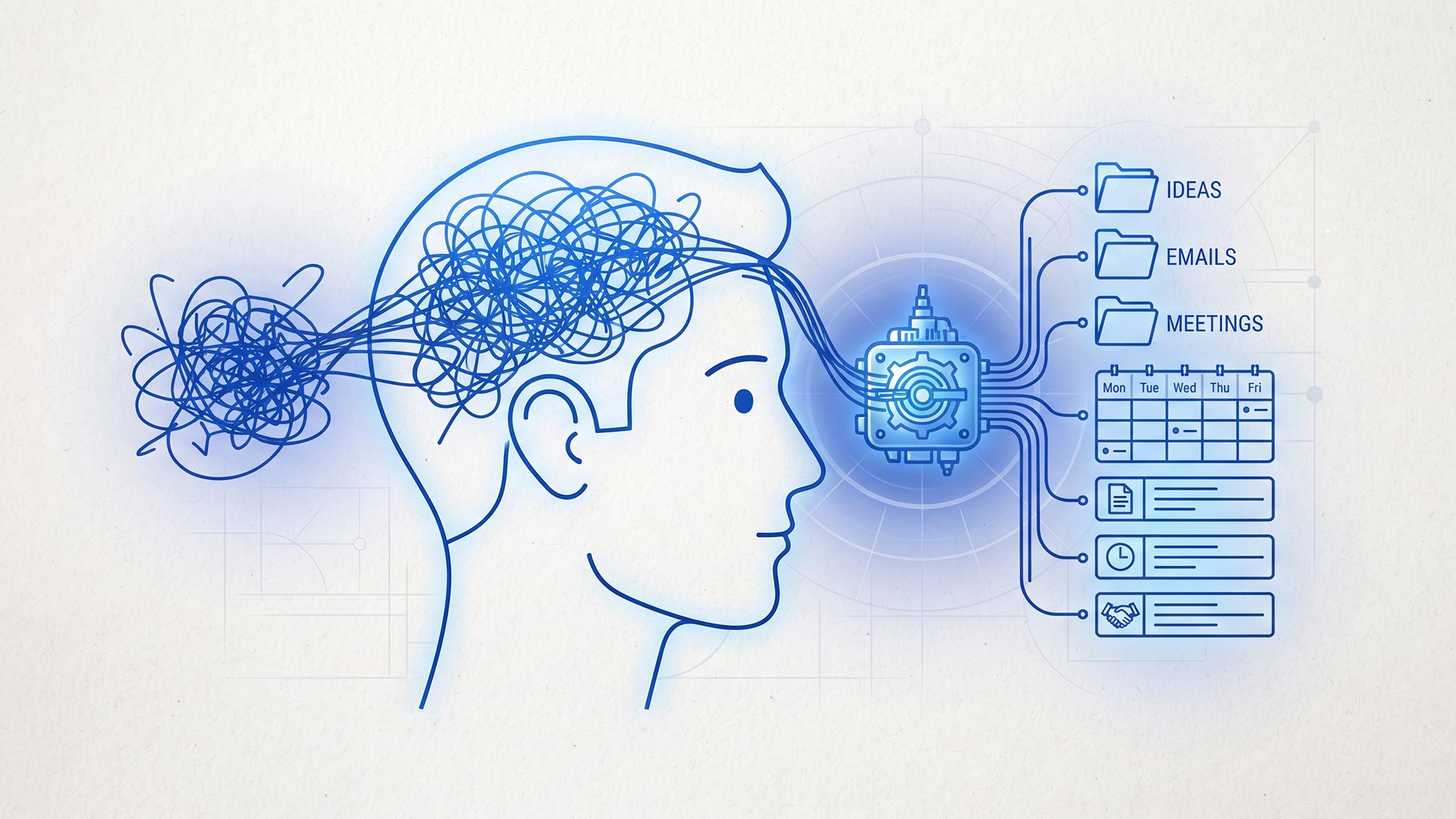
AI isn't simply removing a few hours of administrative work from your week. It's changing how small businesses operate, communicate, sell, make decisions, and compete.
The businesses that understand that shift early won't necessarily become the biggest, but they'll have something their competitors may not: more time to think, experiment, adapt, and build.
Honestly, that's where things get interesting, because before you go hunting for the latest AI tool, take a brutally honest look at your working day.
- What do you repeatedly do every week?
- What tasks make you think:
- "There has to be a better way to do this."
Those are your first candidates for automation.
- Data entry.
- Scheduling.
- Routine customer responses.
- Meeting notes.
- Report generation.
- File organization.
- Administrative follow-ups.
These tasks might seem harmless individually, but together they can consume a ridiculous amount of your week.
AI doesn't replace the person running the business. It gives that person more room to actually run it.
Instead of hoarding shiny AI subscriptions, focus on building automated systems that buy back your time. Here is how AI creates real leverage and scalable digital assets when used strategically.
If yes, start there; if no, keep looking, because the smartest AI workflow isn't the one with the most tools. It's the one that removes the most unnecessary work.
Turn AI Into Your Virtual Secretary
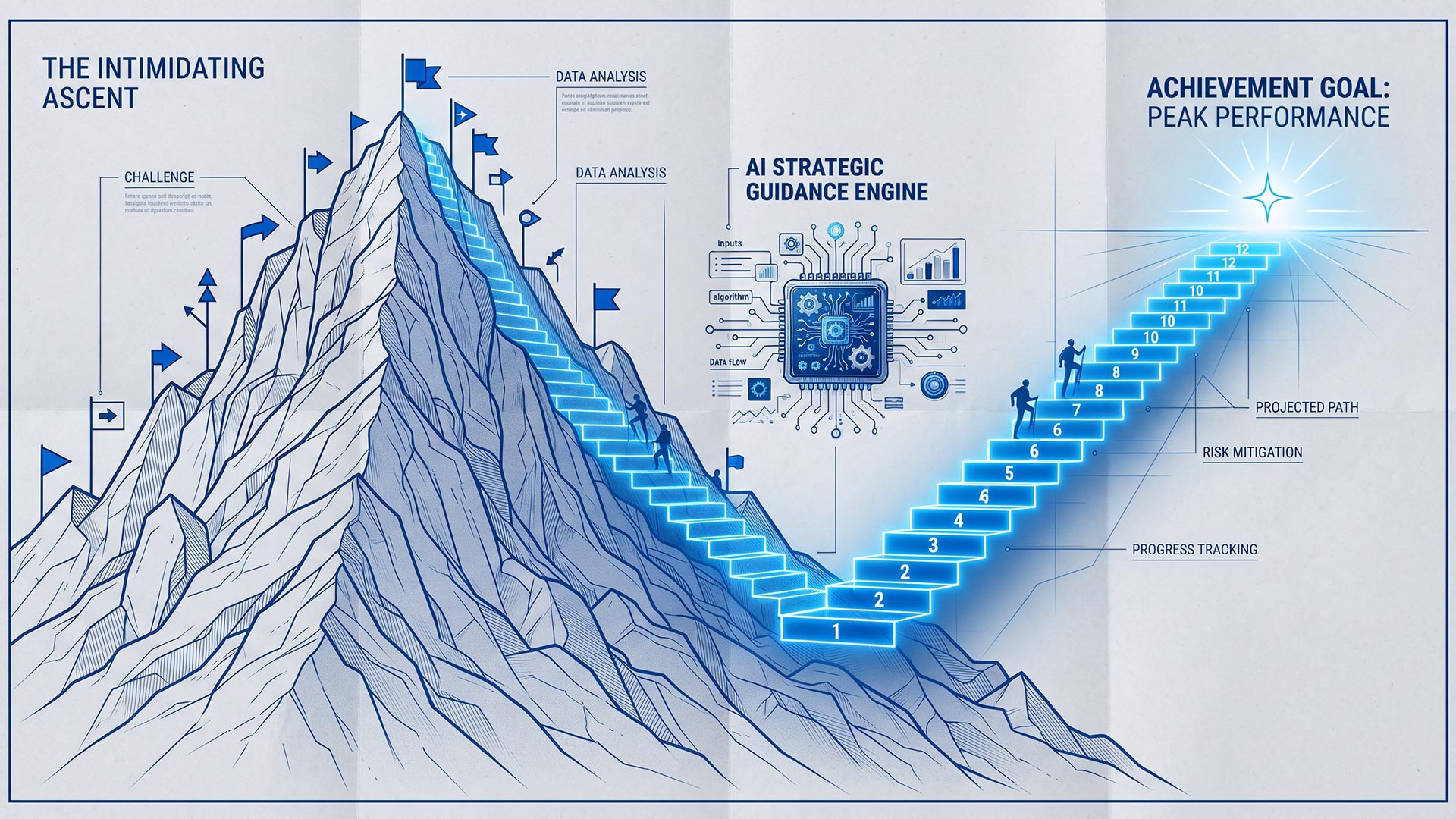
Once you've automated the obvious repetitive tasks, the next opportunity is using AI to manage the information that normally lives inside your head. Because small businesses don't just lose time doing repetitive work, they lose time trying to remember everything.
Meetings, client requests, ideas, deadlines, decisions, notes, follow-ups... eventually it becomes a giant mental junk drawer.
Think about what happens after a typical client meeting: the meeting ends, everyone says they'll follow up, and then someone has to remember what was discussed, who promised what, and when everything needs to happen.
AI can turn that conversation into a structured summary, pull out the important decisions, identify action items, and help organize the next steps. Instead of spending another 30 minutes writing notes, you can spend that time actually doing the work.
And for client-facing businesses, there's another benefit: fewer things fall through the cracks; that matters because your operations eventually become part of your customer experience.
If you consistently forget follow-ups, lose information, or make clients repeat themselves, they won't blame your workflow; they'll blame your brand.
Build a second memory for your business
This is probably one of the most underrated uses of AI. Your business already contains an enormous amount of information, but it's usually scattered across emails, documents, notes, project management tools, conversations, and random files named something like FINAL_v7_REALFINAL.pdf. 😂
AI can help connect that information and make it easier to retrieve when you actually need it.
Imagine being able to ask:
- "What did we promise this client last month?"
- "What were the main problems customers mentioned recently?"
- "What decisions did we make about this project?"
Instead of digging through five platforms and hoping you find the right document, that's the real value.
- AI isn't just helping you do things faster.
- It's helping your business remember better.
And as your business grows, that becomes increasingly important because you can't keep every detail in your head forever.
Use AI to Sell Better, Not Just Work Faster
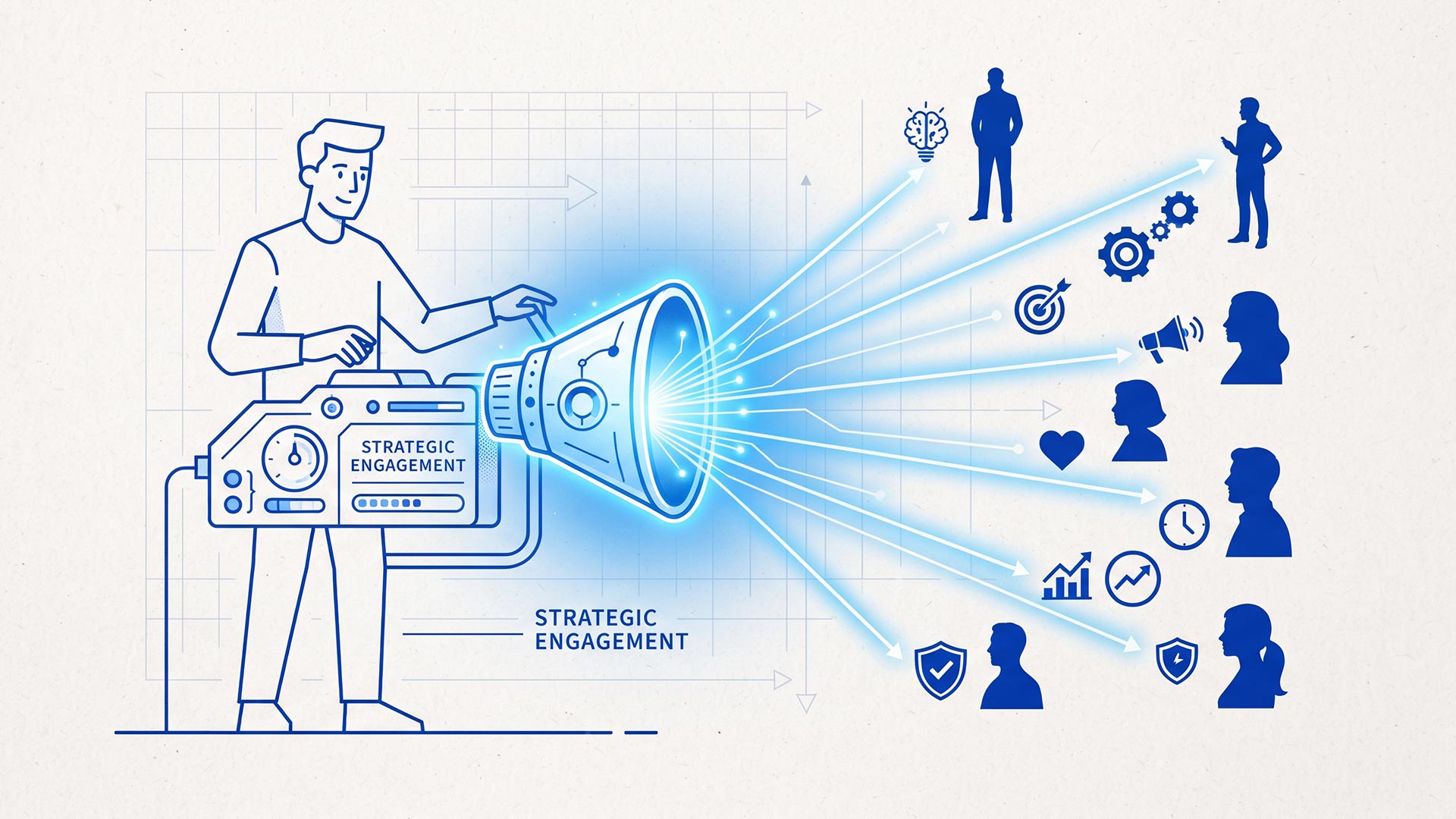
Once AI starts handling some of the boring operational work, the next question is obvious: can it help you bring in more business?
And the answer is: Absolutely, let me explain
Small businesses often don't have a dedicated copywriter, pricing analyst, customer support team, or finance department. AI can help fill some of those gaps without requiring you to build a giant team overnight.
Turn Product Information Into Better Sales Copy
Writing product descriptions sounds easy until you have 50 of them sitting in front of you. AI can take the basic information about a product and turn it into clearer, more persuasive copy, giving small businesses a much faster way to launch and update their offers.
But here's where I would be careful: don't let AI become your brand voice.
If you give it a generic prompt and publish whatever comes back, you'll probably sound exactly like everyone else using the same tool. Instead, use AI for speed, and use your brand strategy, personality, and understanding of your customer for the final decision.
Instead, use AI for speed, but rely on your brand strategy and personality for the final decision, because at the end of the day, building a strong personal brand identity is what creates trust and justifies premium pricing.
Talking about pricing, AI can help analyze competitor information and identify pricing patterns, but the goal isn't to blindly accept whatever number it gives you. It's to give you more information before making the decision yourself.
Faster Communication Creates a Better Customer Experience
The sale doesn't end when someone clicks "buy." Emails, follow-ups, invoices, support messages, and everything in between are still part of the experience.
AI can help draft personalized responses, organize routine communication, and automate invoices so customers aren't left waiting while you're buried under admin work.
And this is where AI and branding quietly meet again: your brand isn't just your logo, colors, or website. It's also how quickly you respond, how clearly you communicate, how professional your invoices look, and whether the customer feels like someone actually cares about their experience.
Every touchpoint tells people what your brand is worth
AI can help you deliver that experience more consistently, but it still needs your strategy behind it; otherwise, you're just automating generic communication at scale.
Use AI to Make Better Business Decisions
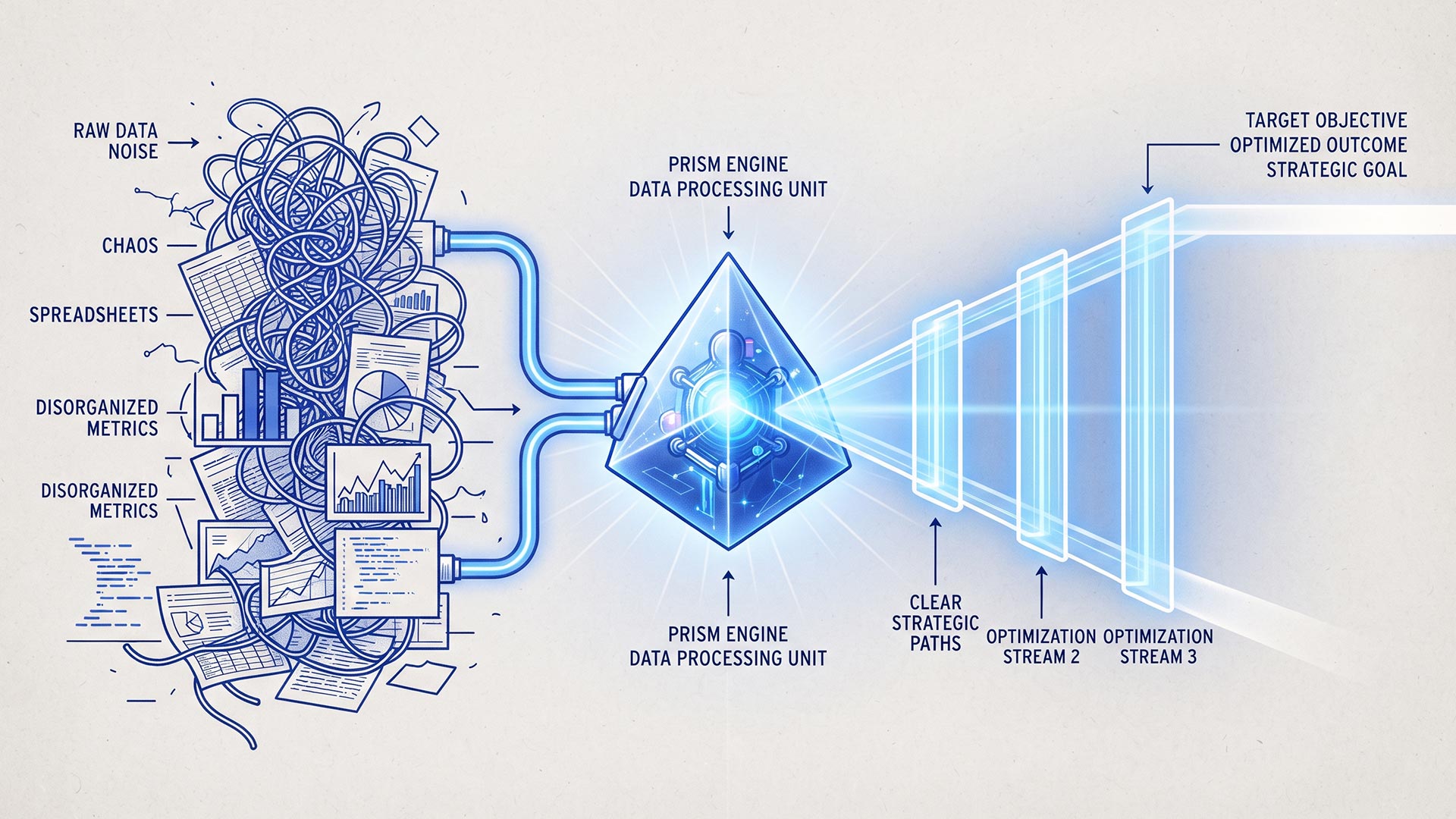
Saving time is great, but there's an even bigger opportunity. What if I tell you that AI can help you think?
Not think for you, but help you turn messy information into something you can actually work with. Being a Virgo, I constantly have lots and lots of ideas. Sometimes I write them down, sometimes I forget, and who knows, maybe some of those ideas would have made me rich. 😅
Now, with AI by my side, “no idea is left behind.”
Small business owners are also constantly making decisions about what to prioritize, what to launch, what to improve, and where to spend their limited resources. AI can help turn those big questions into clearer plans and actionable next steps.
Turn Big Goals Into Actual Plans
"Grow the business" isn't really a plan; neither is "get more customers."
AI can help break a large goal into smaller priorities, tasks, deadlines, and measurable milestones.
Take this software launch example:
Instead of telling AI, "Help me launch my software," you could give it the bigger goal, your deadline, team size, budget, current progress, and what's already been completed.
AI could then help turn that into something much more practical:
- Week 1: Finalize the product and fix the biggest remaining issues.
- Week 2: Prepare the landing page, pricing, and onboarding.
- Week 3: Create the launch content and email sequence.
- Week 4: Launch, collect feedback, and identify what needs improving.
Suddenly, "launch the software" doesn't feel like one giant mountain anymore. It's a series of smaller problems you can actually solve.
The important part isn't letting AI decide your goals; you decide where you're going, and AI helps you figure out how to get there.
Use Data as Feedback, Not Just Numbers
Your business is constantly producing information: website traffic, sales, customer feedback, email performance, social engagement, conversion rates, and even the questions customers keep asking you.
AI can help summarize that information and identify patterns that might otherwise take hours to uncover.
- Maybe a product is getting plenty of attention but very few sales.
- Maybe customers keep asking the same question.
- Maybe one type of content consistently brings better leads.
Those aren't just numbers; they're feedback, and this is where business starts becoming a cycle: Set a goal → Take action → Collect data → Learn → Adjust → Repeat.
The same principle applies to branding.
Your brand strategy shouldn't be something you create once and then forget about. Refining your positioning as you get feedback is key to avoiding the classic niche trap and keeping your brand relevant.
Remember, AI can help you process the feedback faster, but you still have to decide what it means, and that’s the difference between using AI as a shortcut and using it as a strategic advantage.
Don't Let AI Create New Problems
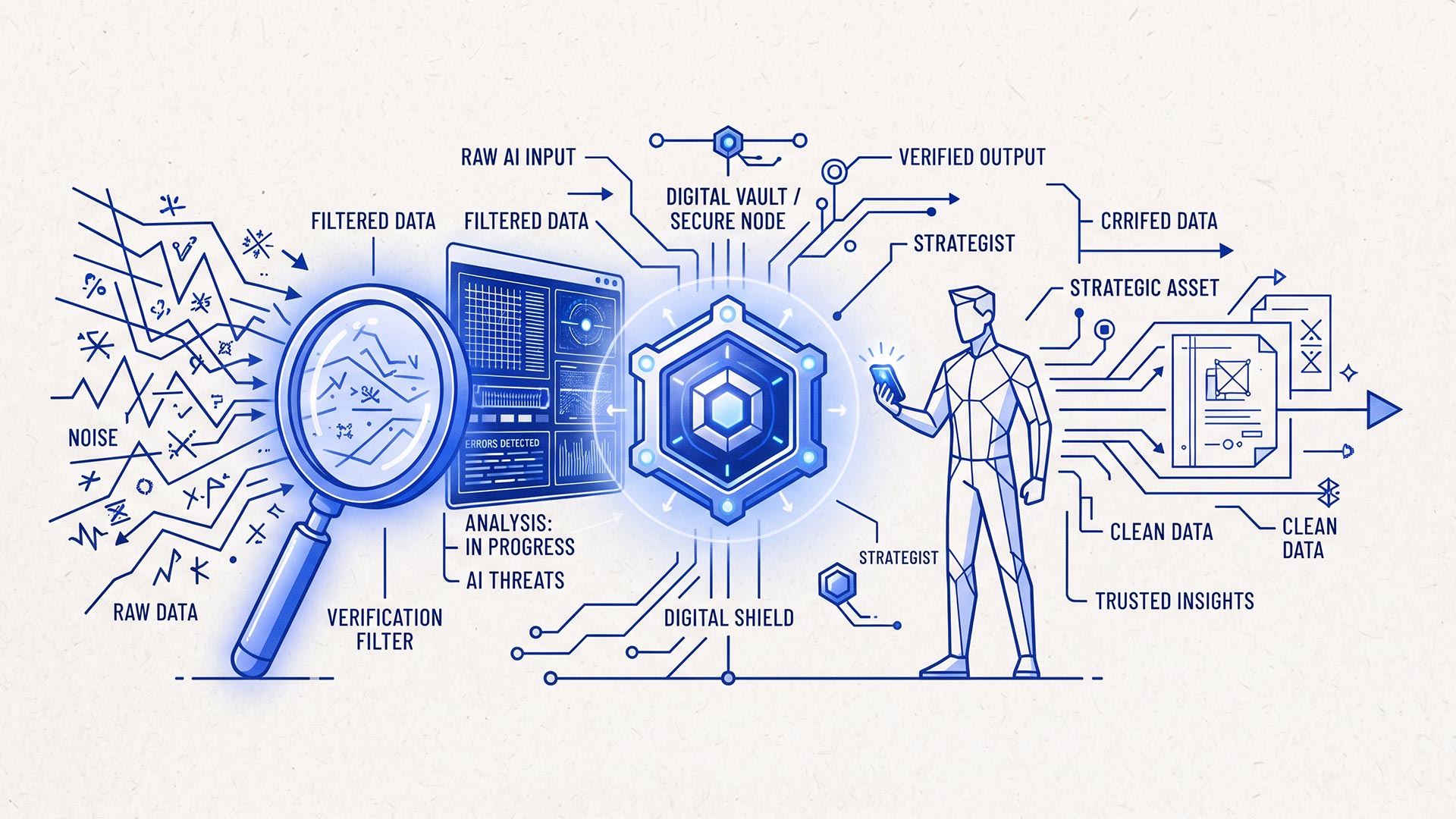
AI can save you time, improve your workflow, and help you make better decisions. But there's one thing you should never forget:
AI can be confidently wrong.
It can produce a convincing answer that sounds perfectly reasonable and still contain incorrect information. That's why using AI in your business isn't about blindly accepting whatever it gives you. It's about knowing when to trust it, when to question it, and when a human needs to make the final call.
If you're using AI for customer communication, financial information, research, or anything that could affect your reputation, always review the output before it reaches the customer.
Because your customer doesn't care whether an AI made the mistake, they remember your business made the mistake.
The same applies to confidential information. Before feeding customer records, private business documents, financial information, or sensitive data into an AI tool, understand how that tool handles your information and what you're actually comfortable sharing. The source specifically highlights data privacy and the risks of putting sensitive business information into AI systems without proper safeguards.
You don't need to become an AI security expert; just use some common sense: AI generates. You verify. You decide. And honestly, that principle applies beyond AI.
The strongest businesses don't outsource their judgment; they use technology to give their judgment better information. That distinction becomes even more important as AI becomes a bigger part of everyday business.
Is AI Actually Worth Paying For?
AI tools are everywhere now, and so are the subscriptions, and trust me, some of those tools can drain your bank account more quickly than you can say the word “AI”. I am looking at you, Claude AI, with $200 per month 😂
ChatGPT+ here, another AI tool there, then a writing assistant, an automation platform, an image generator, a meeting transcription tool... suddenly you're paying for ten different tools and only using three of them.
Before adding another subscription, ask a simpler question:
Is this actually saving my business time or money?
If an AI tool costs $30 a month but saves you several hours of repetitive work, it might be an easy decision. But if you're paying for it because everyone on LinkedIn says it's "the next big thing," that's not an investment. That's digital hoarding.
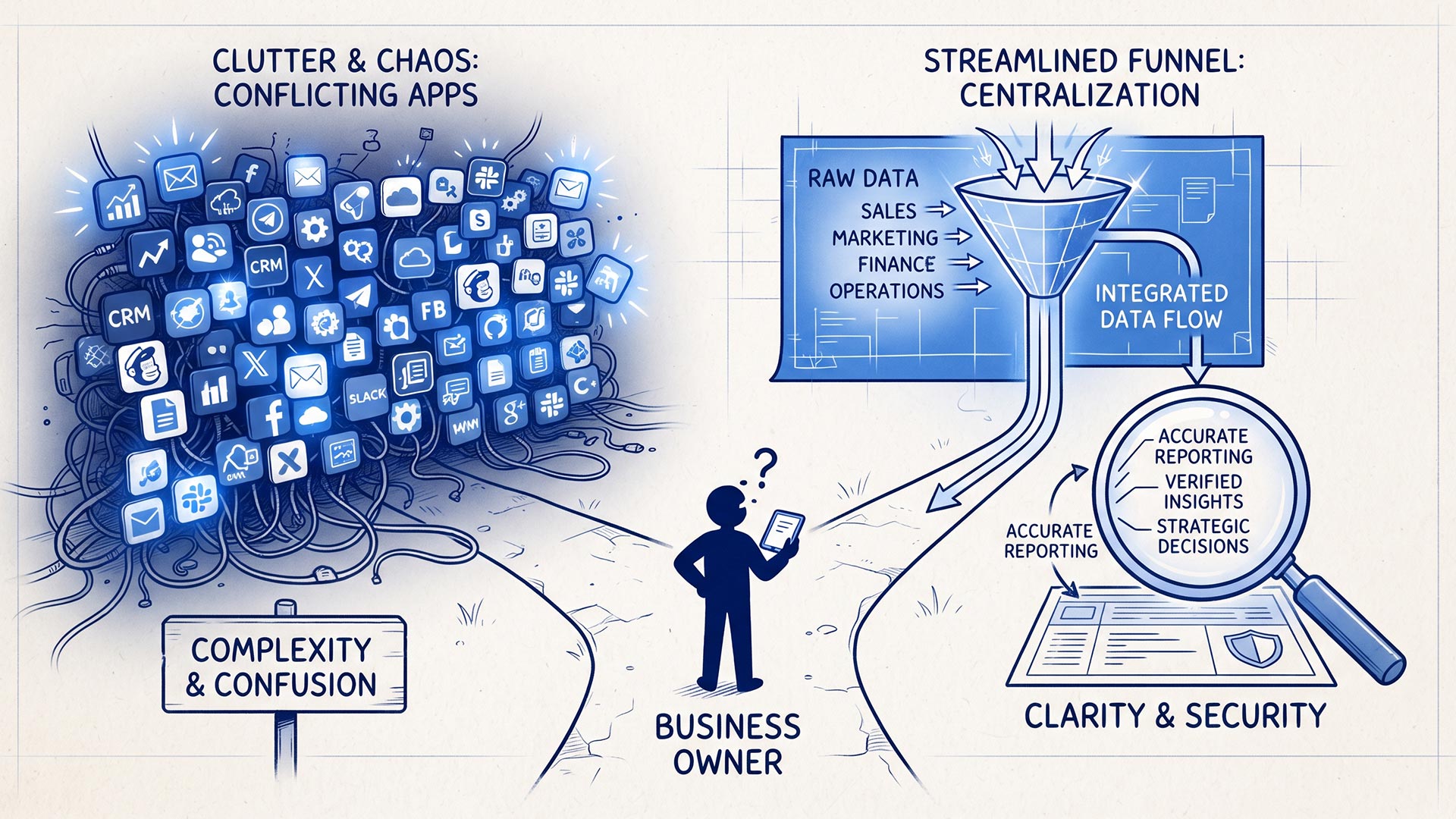
There's another problem worth watching for: too many disconnected tools. You don't want an AI workflow that looks like this:
Tool A → export → Tool B → copy → Tool C → download → Tool D → manually fix everything
That's not automation; that's a new job. 😂
Start with the simplest solution that solves the problem, then expand when there's a real reason to; the goal isn't to have the most AI tools.
It's to build a business where the right tools quietly do their job in the background while you focus on the work that actually needs you.
And that brings us to the bigger picture.
Because once you remove the repetitive work, organize the information, improve customer communication, and use AI to help you make decisions, something interesting happens.
You finally have more time to think about where the business is actually going.
From Chaos to a System that Actually Works
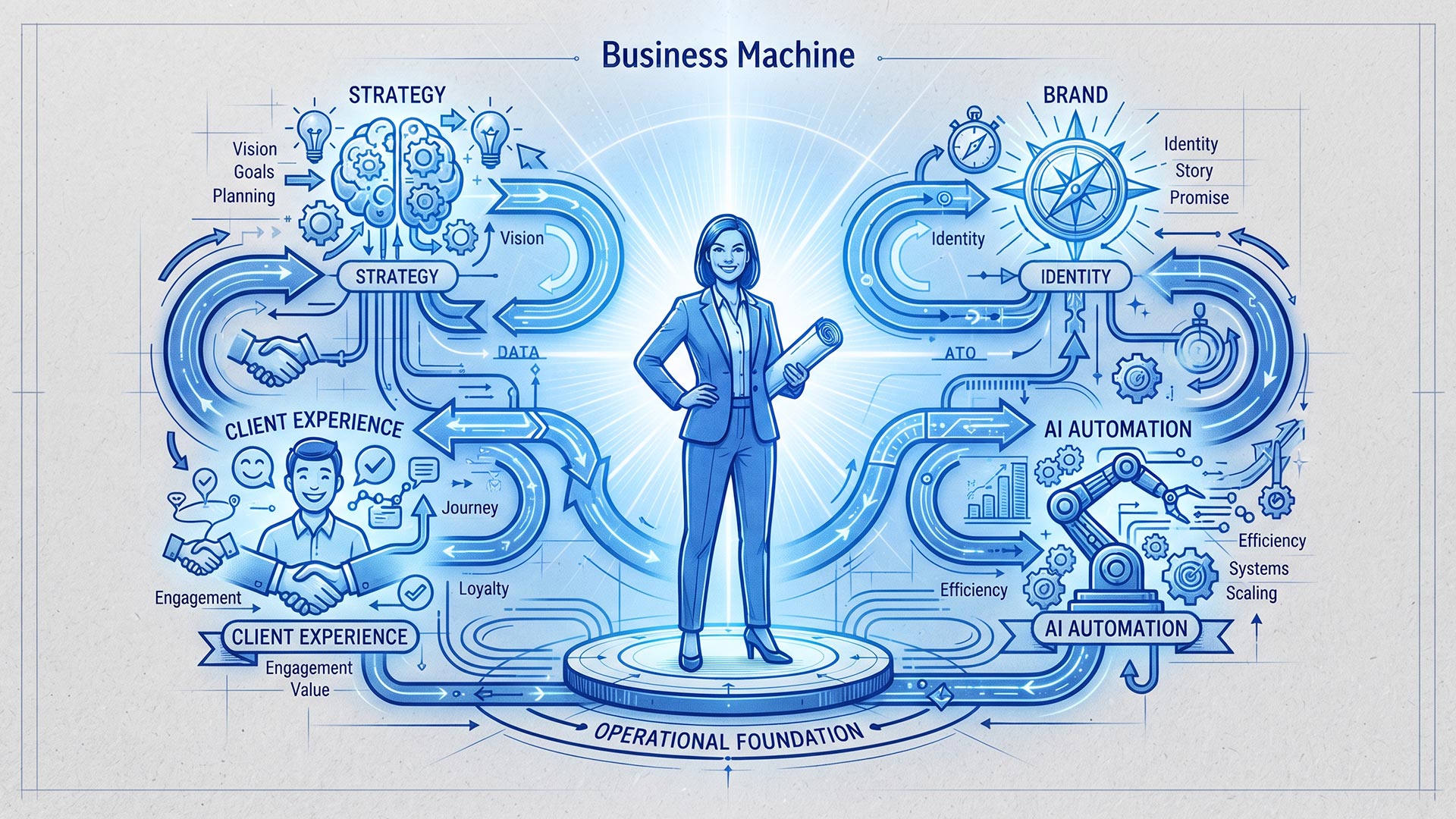
At this point, you might be thinking:
Okay, I've automated some tasks, organized my information, improved my customer communication, and started using AI to make better decisions. Now what?
The answer is simple: connect the pieces.
AI becomes much more useful when you stop treating it as a collection of individual tools and start thinking about how it fits into the way your business actually works.
Start with one clear goal.
Maybe you want to launch a product, increase sales, improve your customer experience, or finally get your marketing under control. Then give AI the context it needs, tell it where you are now, what you've already tried, what resources you have, what your limitations are, and what you're trying to achieve.
From there, AI can help you break the goal into smaller actions, identify what needs to happen first, and turn a vague idea into something you can actually execute.
But don't stop there. Execution creates data, and data creates feedback.
Maybe your new campaign isn't converting, maybe customers keep asking the same question, or maybe the product you thought would be your bestseller is sitting untouched while something else takes off.
That's not totally a failure; it's information. Use it to adjust the plan, test something different, and keep moving. And honestly, this is where I think small businesses have a huge opportunity.
You don't need a massive team to operate like a sophisticated business anymore; all you really need are clear goals, good systems, useful data, and the willingness to keep improving them. Just look at my brand Saiiddesigns
However, I said it again and again: AI can help connect those pieces, but there's one thing it still can't figure out for you: What should your business actually stand for?
And that's where we need to talk about branding.
The Future Isn’t AI ( I know, shocking )
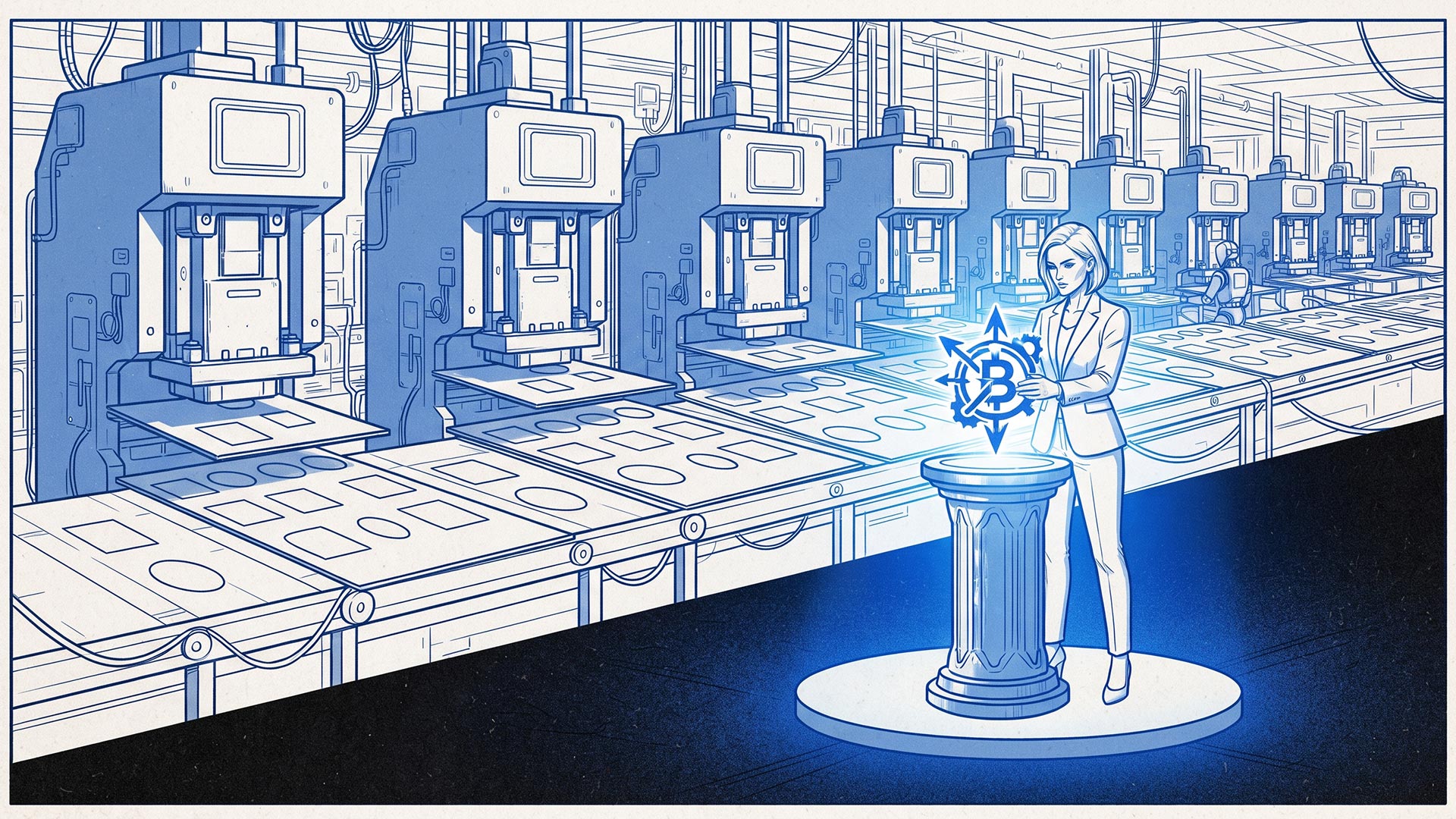
After everything we've covered, here's the part that might surprise you.
AI isn't your biggest competitive advantage. Because your competitors have access to the same tools.
- They can generate the same images.
- They can write with the same models.
- They can automate the same tasks.
- They can analyze the same data.
So if everyone has access to the same technology, technology itself stops being the differentiator. The real advantage is what you do with it.
Your understanding of your customers, your positioning, your story, your judgment, and your ability to create something people actually care about.
AI can help you move faster, but it can't decide where you should go, and this is where branding becomes more important, not less.
The businesses that stand out won't necessarily be the ones using the most AI. They'll be the ones with something worth remembering—which comes down to leveraging brand storytelling as your secret weapon in a world full of automated noise.
They'll be the ones with something worth remembering.
So yes, use AI.
- Automate the boring stuff.
- Build better systems.
- Experiment.
- Learn.
- Move faster.
But don't automate your identity. Because the future may belong to businesses powered by AI, but people will still choose brands they trust.
Ready to Build Yours?
If you've been working on your business but still feel like something isn't quite clicking, that's exactly what I help with.
Book a Brand Discovery Call with me and let's look at your positioning, messaging, audience, and overall brand strategy together.

👉 BOOK YOUR BRAND DISCOVERY CALL
Because AI can help you build faster, I'll help you build smarter.
For more Branding, Marketing, Motion, and Storytelling, you are already in the right place
Written by: Saiid of @saiiddesigns


.svg)