

Why AI Will Change How We Work Forever

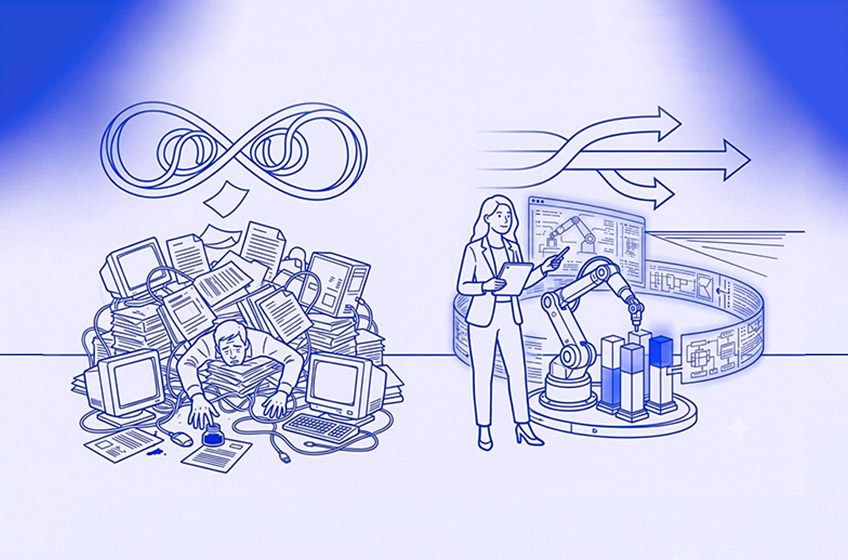
Imagine walking into work tomorrow morning, you grab a coffee, open your laptop, and by 10 AM, your coworker has already finished a full day’s worth of tasks. They wrote emails, summarized reports, organized meeting notes, and even brainstormed ideas for the next project.
They’re not working harder than you; they’re working differently.
Welcome to the AI era.
While some people are still debating whether artificial intelligence is worth learning, millions of professionals are already using it to save hours every week. They’re automating repetitive tasks, making better decisions, and focusing more of their time on work that actually requires human thinking.
According to recent studies, 40% of employees in the United States already use AI at work, while 92% of businesses plan to increase their investment in AI over the next few years. This isn’t another technology trend that’s slowly gaining traction. It’s a fundamental shift in how work gets done.
The good news? This isn’t another “AI is coming for your job” article. ( sort of )
It’s a practical look at what’s changing, which jobs are evolving, and, most importantly, how you can stay ahead rather than get left behind.
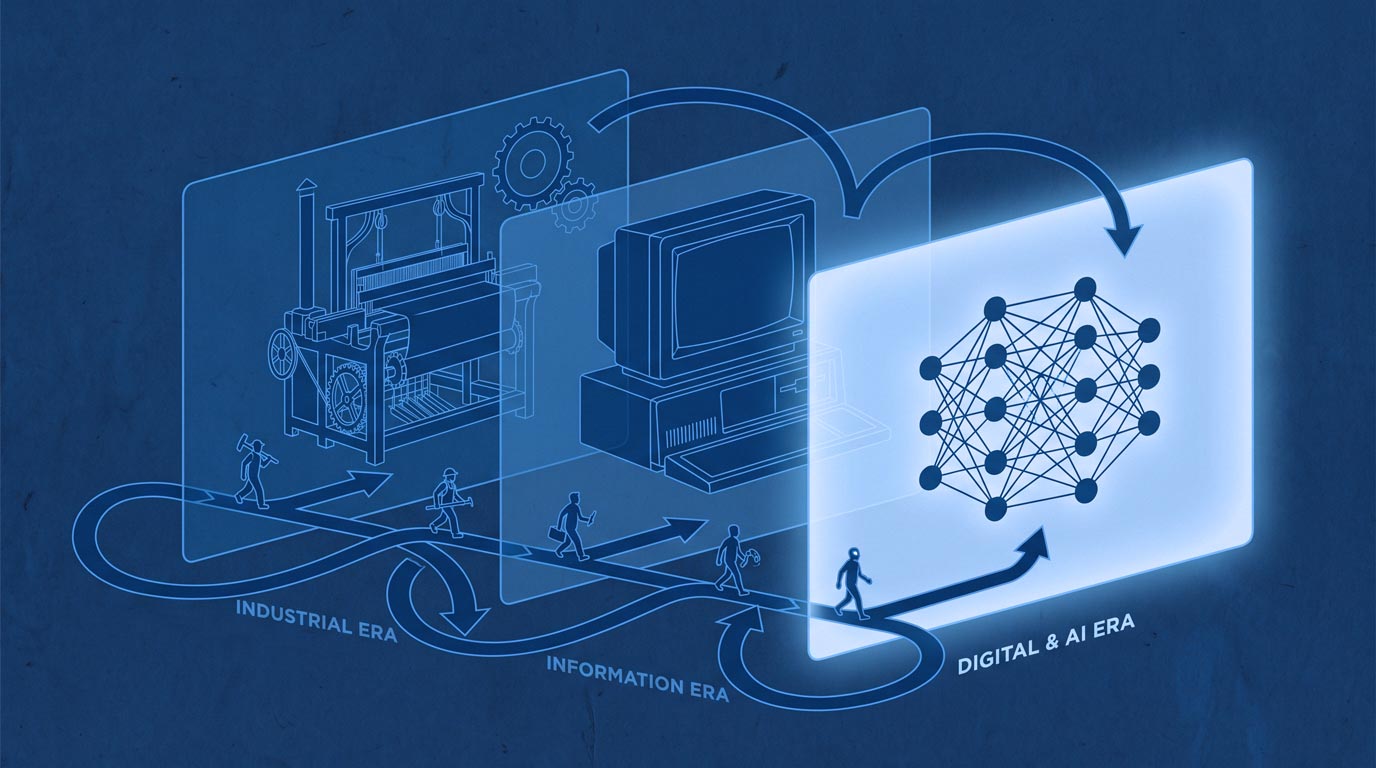
This had happened before.
Technology has always changed the way we work. Remember when the steam engine powered factories, many feared machines would replace human labor. Years later, electricity transformed entire industries. Then came computers, followed by the internet, each one sparking the same question:
“Will this take our jobs?”
One of the most famous examples came from 19th-century England, where a group of textile workers known as the Luddites destroyed weaving machines they believed threatened their livelihoods. Their fear wasn’t irrational. Their jobs were changing, and quickly.
But history tells a bigger story: while new technology disrupted existing roles, it also created entirely new industries and careers that previously didn’t exist. Imagine trying to explain the jobs of a social media manager, app developer, or UX designer to someone living in 1850. They simply couldn’t have imagined them.
AI is following the same pattern, but at a much faster pace; instead of replacing every worker, it’s reshaping the tasks we perform every day. Some repetitive jobs will disappear. Others will evolve. And entirely new opportunities will emerge for people willing to adapt.
The question is no longer whether AI will change the way we work.
The question is whether we’ll choose to evolve with it.
Do Numbers Lie? I Don’t Think So
By now, it’s easy to dismiss AI as just another tech trend. But the data tells a very different story.
AI isn’t being tested in a few experimental labs anymore. It’s already part of the daily workflow for millions of people across almost every industry, from healthcare and finance to marketing, education, and software development.
According to recent research, 40% of employees in the United States already use AI in their day-to-day work. In India, that number rises to 80%, making it one of the fastest AI-adopting countries in the world.
Businesses aren’t slowing down either. In fact, 92% of companies say they plan to increase their investment in AI over the next few years, not because it’s a trend, but because it’s becoming a competitive advantage.
Perhaps the most eye-opening statistic is this: more than half of organizations believe AI will significantly change entry-level jobs in the near future.
That doesn’t mean those jobs disappear overnight. It means the expectations are changing.
Tomorrow’s employees won’t just be expected to know how to write reports, analyze spreadsheets, or answer emails. They’ll be expected to know how to do those things with AI.
That’s an important distinction. The biggest shift isn’t replacing people; it’s raising the baseline of what productivity looks like, and those who learn to work alongside AI today will have a significant advantage over those who wait until it becomes unavoidable.
So, What AI is Good At, Right Now ?
One of the biggest misconceptions about AI is that it’s something we’ll start using someday.
Most of us are already interacting with AI every single day, whether we realize it or not. From recommending the next movie on Netflix to filtering spam emails and suggesting the fastest route home, AI has quietly become part of our daily lives. The difference now is that it’s moving beyond convenience and becoming a powerful tool for getting work done.
Take healthcare, for example. Doctors are using AI to summarize patient notes, assist with diagnoses, and detect diseases from medical scans with remarkable accuracy. It doesn’t replace medical professionals, but it gives them better information and helps them make faster, more informed decisions.
In finance, AI is helping banks detect fraud, analyze transactions, and generate reports in a fraction of the time it once took entire teams. Instead of spending hours sorting through data, analysts can focus on interpreting the results and making strategic decisions.
Software development has seen a similar transformation. Tools like GitHub Copilot assist developers by suggesting code, identifying errors, and speeding up repetitive tasks. Some studies even suggest developers complete certain tasks up to 55% faster when working alongside AI.
The creative industry is evolving too; designers use AI to generate concepts, marketers use it to brainstorm campaigns, writers use it to overcome creative blocks, and entrepreneurs rely on it to research ideas, draft proposals, and automate repetitive work. The goal isn’t to replace creativity; it’s to remove the busywork so more time can be spent on thinking, refining, and creating.
Even customer support has changed dramatically. AI-powered assistants now answer common questions around the clock, allowing human teams to focus on conversations that require empathy, judgment, and problem-solving.
And here’s the interesting part…We’re still in the early days.
If AI can already do this today, imagine what the workplace will look like five years from now.

Which Jobs Will Change the Most ?
Whenever AI comes up, one question always follows: “Is my job safe?” The honest answer is… it depends.
AI is exceptionally good at tasks that follow patterns. It can summarize documents, analyze data, answer common questions, organize information, and automate repetitive work faster than any human.
That’s why roles built around routine tasks, such as data entry, basic reporting, customer support, and administrative work, are already changing.
But work isn’t made up of tasks alone; it’s made up of judgment, creativity, communication, and human connection. Those are qualities AI still struggles to replicate, and they’re becoming even more valuable as automation increases.
Think about professions like teachers, therapists, healthcare professionals, skilled trades, business leaders, and strategists. AI can support them by saving time and improving decision-making, but it can’t replace the trust, empathy, experience, and critical thinking they bring to the table.
The same applies to designers and other creative professionals.
AI can generate a logo, write a headline, or even create an entire brand identity in seconds. But it doesn’t know your client’s story, their market, or what makes their business different.
A great designer isn’t valuable because they know how to use Illustrator; they’re valuable because they know which problem they’re solving before they open Illustrator.
AI can speed up the creative process by generating concepts, exploring directions, and removing repetitive tasks. But understanding people, asking the right questions, and turning business goals into meaningful design will always require human judgment.
That’s why the future belongs to designers who combine creativity with strategy, not those who rely on execution alone.
And if you’re a designer looking to move beyond selling logos and start building brands strategically, I recently created a free Branding Course that covers the fundamentals of positioning, messaging, and brand strategy. Feel free to check it out before continuing.
A marketer won’t disappear, but the marketer who learns to use AI will probably accomplish twice as much in the same amount of time.
A writer won’t become obsolete, but a writer using AI for research, outlining, and editing will have a significant advantage over someone doing everything manually.
The real competition isn’t humans versus AI; it’s humans who embrace AI versus humans who ignore it.
What Work Will Look Like in 2077
No one knows exactly what the workplace will look like in 2077, but one thing is certain: AI won’t replace work. It will reshape how we work.
Imagine a marketer starting the day with an AI-generated campaign brief, allowing them to focus on creative direction instead of repetitive research. A doctor reviews AI-powered insights before meeting a patient, helping them make faster, more informed decisions. A small business owner launches a product with AI assisting in research, content creation, and planning, leaving more time to build relationships and grow the business.
Designers will evolve too. Rather than spending hours creating endless variations, they’ll use AI to explore concepts faster and dedicate more time to strategy, storytelling, and creating brands that genuinely connect with people.
That future might sound ambitious, but for many businesses, it’s already becoming reality.
The One Mindset Shift That Changes Everything
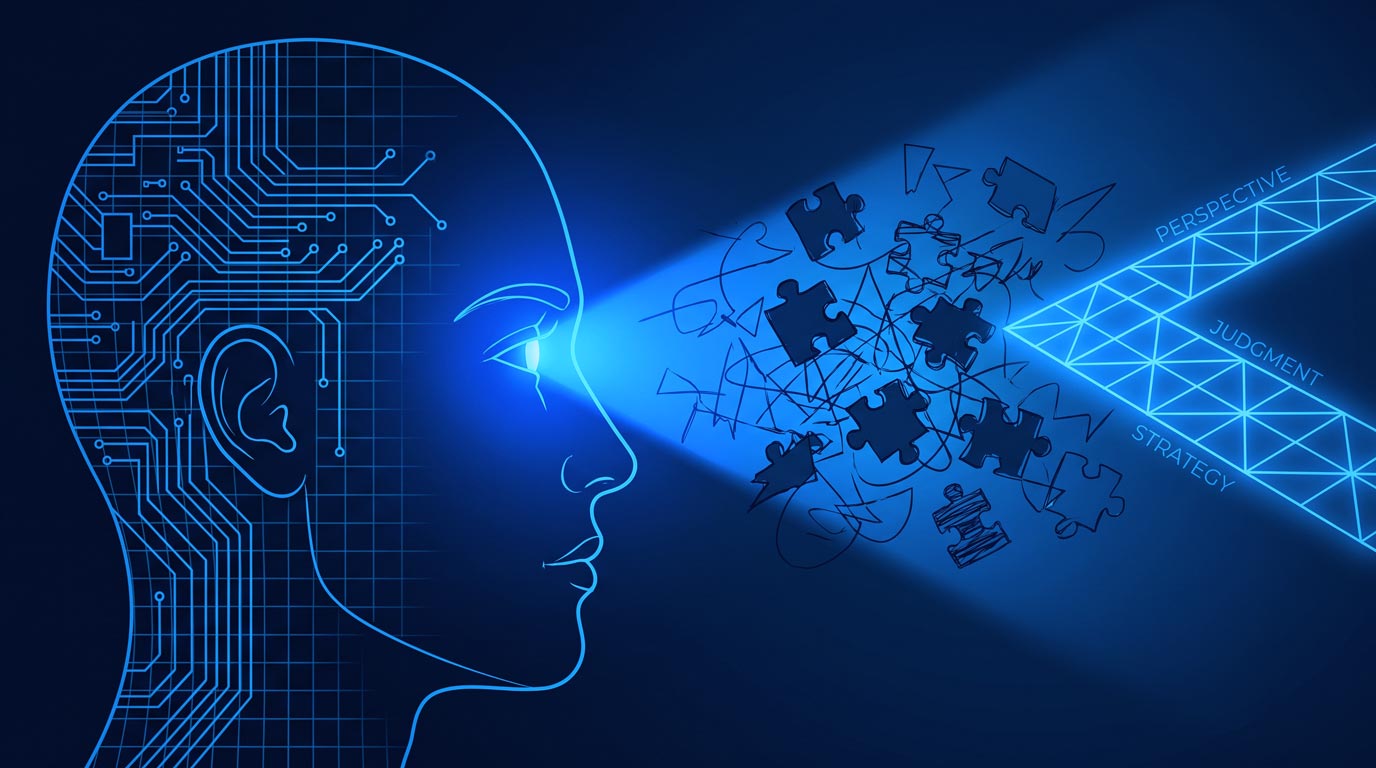
The people who thrive in the AI era won’t necessarily be the most technical; they’ll be the most adaptable. Instead of asking, “Will AI replace me?”, ask yourself: “How can AI help me become better at what I already do?”
That small shift changes everything.
AI can generate ideas, automate repetitive tasks, and speed up execution, but it can’t replace your experience, judgment, empathy, or ability to understand people. Those are the qualities that build trust, strengthen brands, and create meaningful businesses.
Technology may level the playing field, but your perspective is what sets you apart.
Start Today, Not Tomorrow
You don’t need to master every AI tool overnight; you simply need to start.
Use AI to summarize your notes, brainstorm ideas, organize research, or automate repetitive tasks. If you’re a designer, let it speed up production so you can spend more time where you create the most value: solving problems, shaping strategy, and building brands that people remember.
Small improvements, repeated consistently, create remarkable results over time.
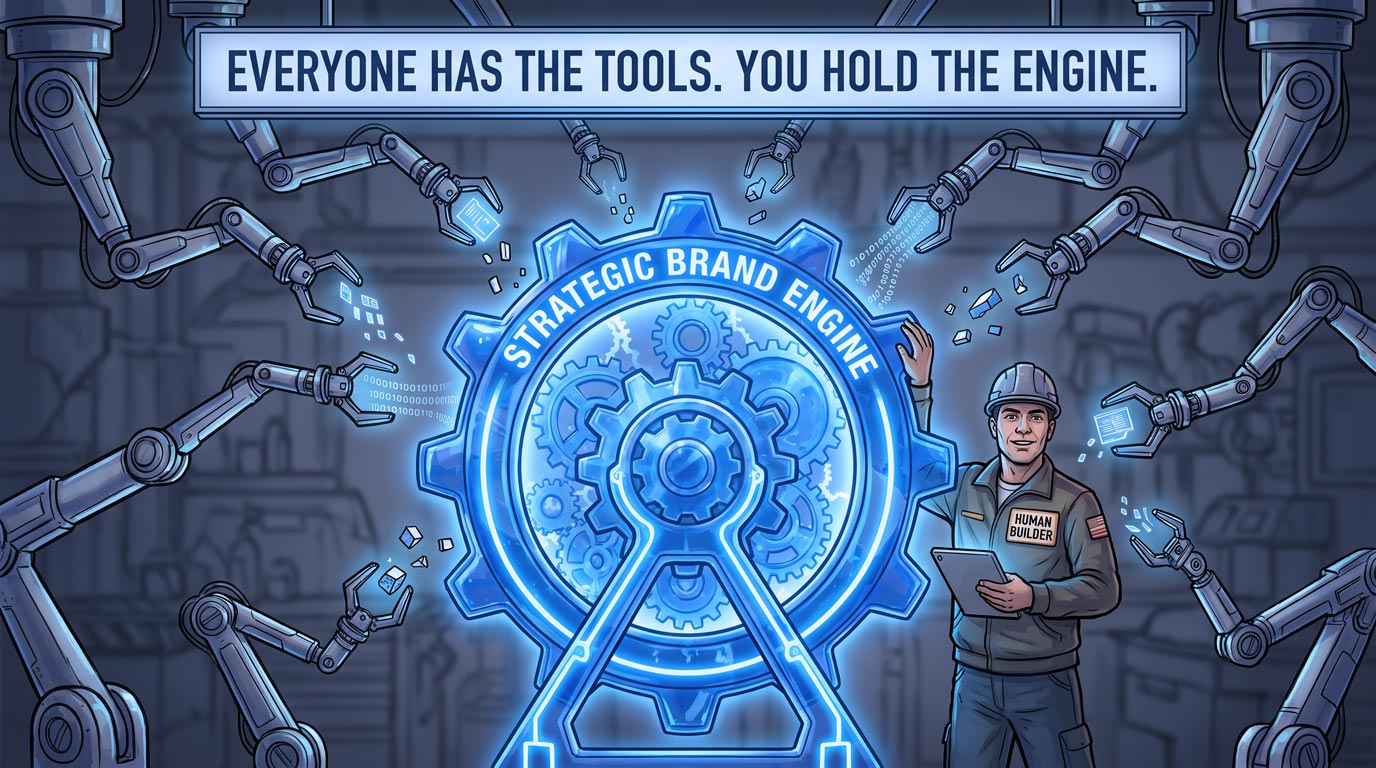
AI Is the Tool. Your Brand Is the Advantage.
Here’s what I believe:
Over the next few years, almost everyone will have access to the same AI tools; the real difference won’t be who has the best software. It will be those who have the clearest strategy, the strongest brand, and the deepest understanding of their audience.
AI can help you execute faster. It can’t tell you who you are, what makes your business different, or why customers should choose you over someone else.
That’s where branding still wins. If you’re ready to build a brand that’s clear, memorable, and designed for the AI era, I’d love to help.
👉 Book a free Brand Discovery Call, and let’s explore how strategy, design, and AI can work together to help your business stand out.
For more Branding, Marketing, Motion and Storytelling, you already in the right place
Written by: Saiid of @saiiddesigns


.svg)