

Brand Design or Brand Strategy: Which should you focus on selling?

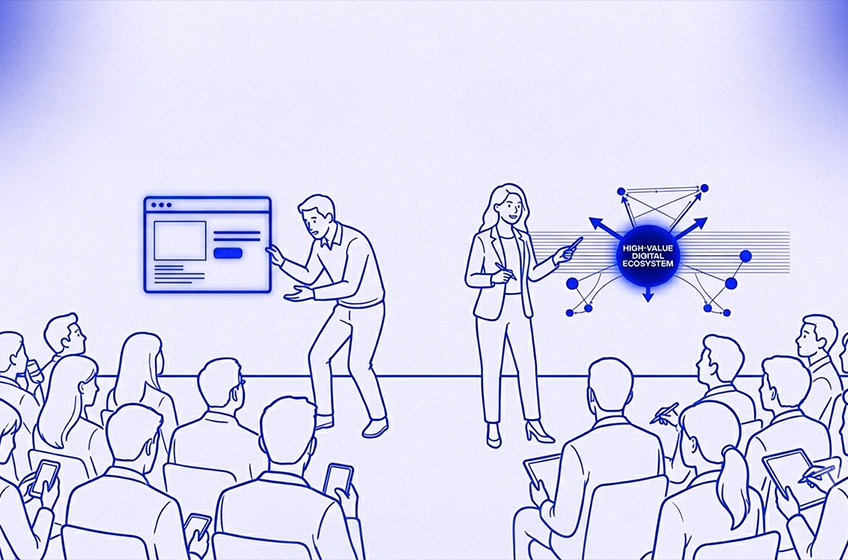
You are booking clients, but you are stuck in the "pixel-pusher" trap. You deliver beautiful, high-fidelity mockups, but clients treat you like a commodity, micromanaging your font choices and arguing over a $500 invoice.
Trust me, I have been there, and it sucks, I know. Hopefully, this article will change how you look at things.

Why "Just Beautiful Design" No Longer Commands Premium Pricing
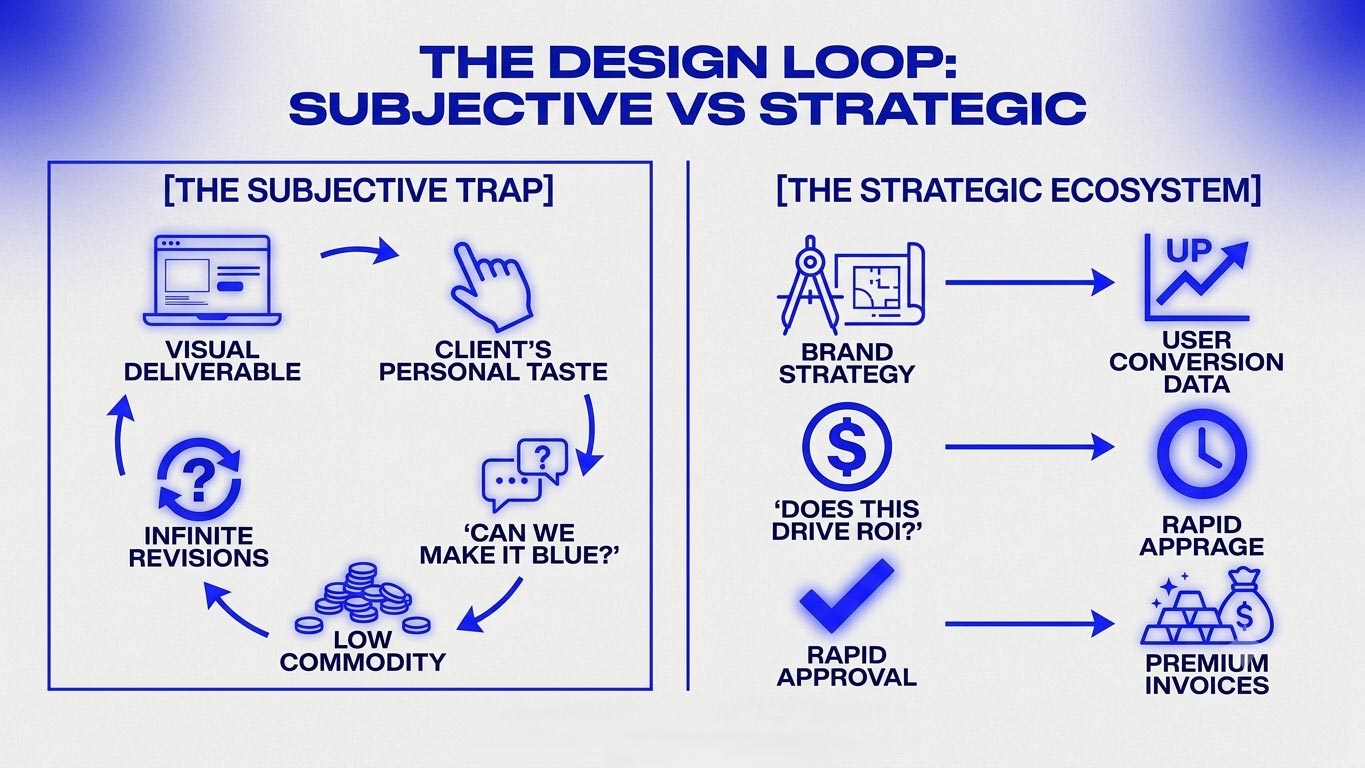
When you position yourself solely as a visual designer, you are selling an artifact. In a world with cheap templates, AI generators, and race-to-the-bottom freelancing platforms, pure aesthetics are rapidly becoming democratized. Without strategy, design is entirely subjective, leaving you vulnerable to endless feedback loops based on a client's personal mood rather than market data.
Real-World Example:
Think about a local restaurant hiring a freelancer for a rebrand. If the freelancer only sells "a new logo and website layout," the restaurant owner evaluates it based on whether they personally like the color blue. They will argue over the invoice because they see it as a business expense rather than an investment.
Key Strategic Insight:
If a client comes to you with a pre-made checklist of features ("I need a 5-page website with a banner"), they are treating you like a commodity executioner. To change the price, you have to change the diagnostic process before they ever see a canvas.
What It Actually Means to Sell Strategy
Selling strategy means moving the conversation entirely away from deliverables and anchoring it to business outcomes. Strategy isn't abstract fluff; it is the deliberate alignment of a brand's visual identity with concrete business goals like conversion rates, user retention, or premium positioning. You aren't building a website; you are building a tool that solves a specific operational bottleneck.
Real-World Example:
Consider Gymshark. Their explosive growth didn't happen just because their online store looked clean. It succeeded because their digital strategy perfectly aligned a community-driven influencer ecosystem with a high-performance e-commerce engine built to handle massive, real-time drop traffic. The design served the community mechanics, not the other way around.
Key Strategic Insight:
On discovery calls, stop asking "What colors or styles do you like?" and start asking Who are we trying to attract?" "What makes this brand different?" "What problem are we solving?" This instantly reframes you from a creative utility to a business consultant.
The Anatomy of a High-Value Digital Ecosystem
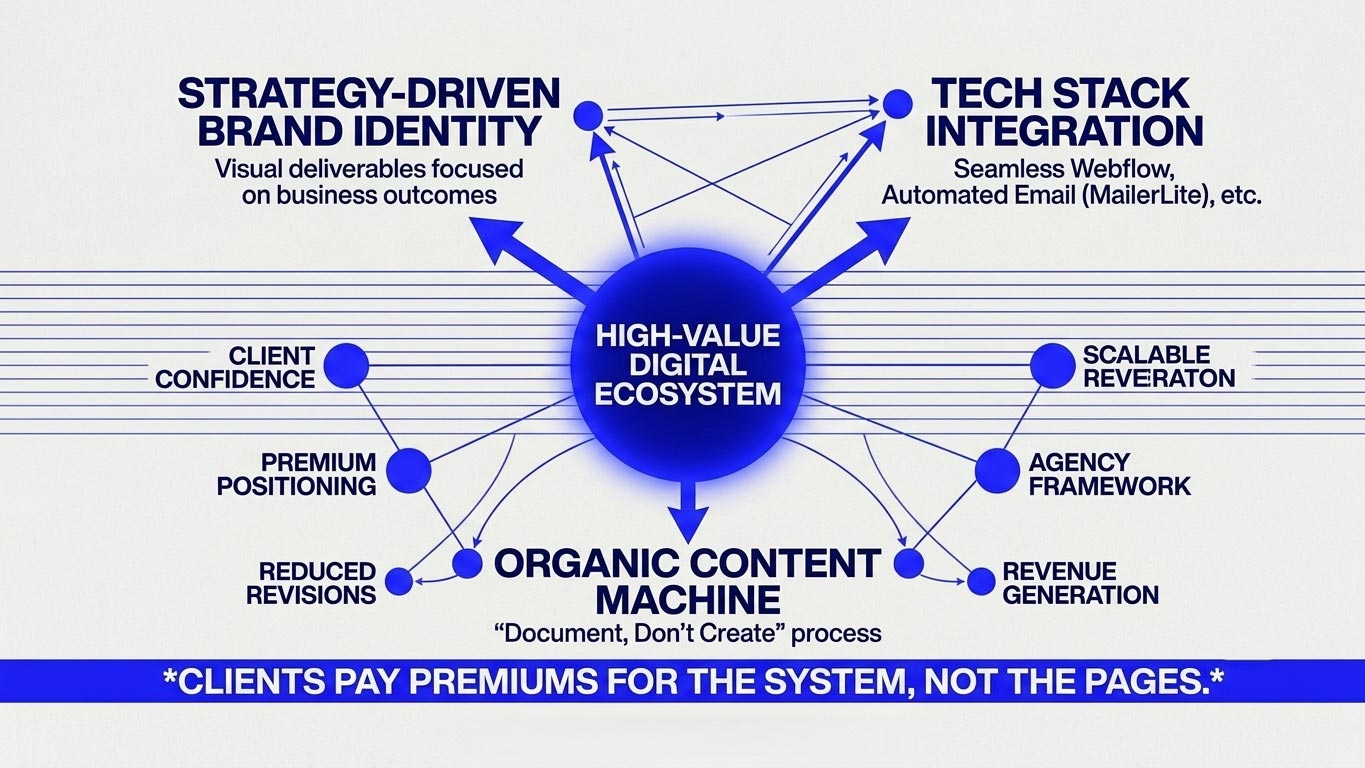
A beautiful website sitting in a vacuum does nothing for a business. True strategy looks at the broader digital ecosystem and how the brand identity integrates with a functional tech stack to automate growth.
This means connecting seamless Webflow development with automated email marketing sequences (like MailerLite) and an organic content machine. By implementing a "Document, Don't Create" approach, you can show clients how to turn their daily business operations into automated brand assets.
Real-World Example:
Look at modern newsletter-driven businesses like The Hustle or Morning Brew. Their value wasn't in complex web layouts; it was in a flawless, friction-free landing page optimized for a single action (email capture) tied directly to automated onboarding sequences that turned cold traffic into deeply engaged readers within 48 hours.
Key Strategic Insight:
High-value partners don't sell isolated pages; they sell interconnected digital engines where the design framework, content delivery system, and backend automation work together to generate measurable revenue.
Actionable Steps to Transition Your Agency from Service to Strategy
Moving from a service-based mindset to a strategy-first agency requires a complete overhaul of how you present your value and protect your time.
You can start with how you treat your website. Read about that HERE
Audit Your Case Studies:
Stop publishing static grid mockups on Behance; instead, write case studies structured around the business problem, your diagnostic strategy, and the measurable results.
Productize a Paid Discovery Phase:
Stop giving away your best thinking for free on sales calls. Charge a standalone fee for a "Discovery & Road mapping" phase. If they want you to build it in Webflow later, that is a separate execution contract.
Change Your Vocabulary:
Remove words like "freelancer," "web design," and "templates" from your positioning. Use business-centric language: "digital assets," "growth ecosystems," and "scalable brand systems."
Read more about: How to Move From Freelancer to Premium Brand Identity HERE
Key Strategic Insight:
You cannot sell a premium strategy if your onboarding process looks cheap. Productizing your discovery phase acts as an immediate filter, separating low-budget micromanagers from high-value clients who respect your expertise.
Conclusion
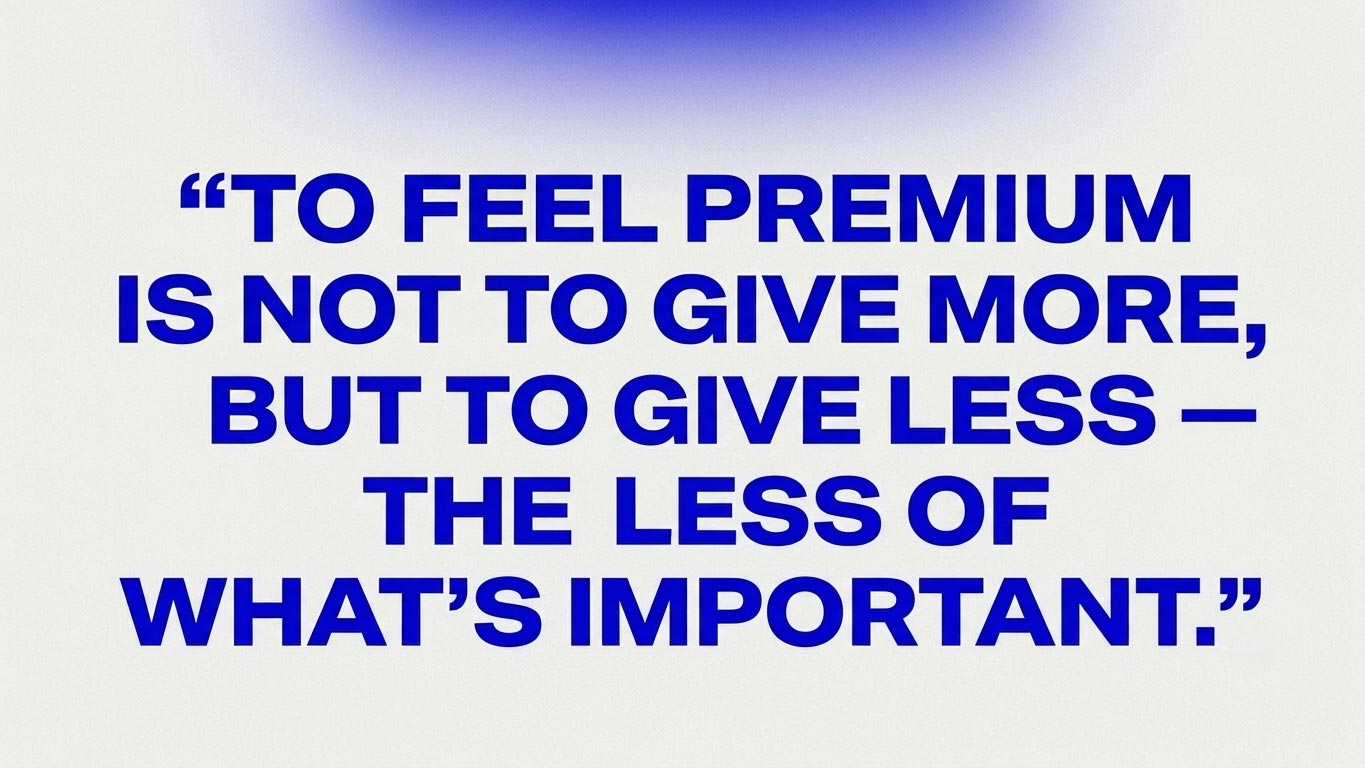
Scaling your creative business doesn't require mastering a brand-new design tool or working 80-hour weeks. It requires a fundamental shift in your business model. When you stop selling the artifact (the design) and start selling the outcome (the strategy), you unlock true creative freedom and the ability to command premium prices.
Want to move beyond selling visuals and build a strategy-first brand process? Explore how Saiiddesigns helps businesses create brands built on clarity, positioning, and purpose.
Book Your Free Brand Strategy Now

For more Branding, Marketing, Motion and Storytelling, you already in the right place
Written by: Saiid of @saiiddesigns


.svg)