

Framer vs. Webflow vs. WordPress: Which is Best for High-Ticket Brands?

In the world of Digital Marketing, your website isn't just a URL. It is the virtual headquarters of your Brand Identity.
If your site looks like a generic template, you are signaling to your audience that you are a commodity. But if your site feels like a highly customized, personalized experience, you are signaling that you are a Premium Brand.
As a Branding & Design Agency owner, I’ve built on all of them. I’ve lived through the "Plugin Hell" of WordPress, played with the "Animation Ease" of Framer, and ultimately moved my entire eco system to Webflow.
Here is the truth about building a Branding Website in 2026.
1. Webflow: The "Gold Standard" for Custom Branding
I’ll be direct: Moving Saiiddesigns to Webflow was the best business decision I’ve ever made.
For a Strategic Brand Design, Webflow is unmatched. It allows for "Clean Code" and total creative freedom without the limitations of a template. When I’m Developing Brand Identity for a client, I need to know that the Visual Branding won't be broken by a random update.
The Pitch: For a Strategic Branding Agency, Webflow is the "Iron Suit." It’s built for designers who understand code structure but don't want to manage servers.
✅ Pros:
- High-Ticket Trust: Clean, semantic code means better SEO and faster load times.
- Native Everything: SEO, Localization, and CMS are built-in, reducing "Plugin Dependency."
- Client Confidence: The "Editor" mode is foolproof. Clients can’t break the site, but they can update the content easily.
❌ Cons:
- Learning Curve: It requires an understanding of CSS box models(not just drag-and-drop).
- The "Seat "Tax: Pricing can climb quickly as you add team members to a workspace.
- The Choice: Use this for Full Branding Packages where the client needs a long-term, high-performance home.

2. Framer: The Animation Specialist (with a catch)
Framer has taken the design world by storm with its "Figma-to-Site" workflow and ridiculously smooth Motion Storytelling templates.
However, for a long-term Corporate Identity Design, it can feel limiting. In my experience, while the animations are top-tier, the CMS and back-end structure can feel "expensive for what you get." It’s great for ahigh-impact landing page, but for a scalable Branding Identity, it’s often a secondary choice.
The Pitch: Framer is like Figma came to life. It’s the king of Motion Storytelling and rapid-launch landing pages.
✅ Pros:
- Animation Elite: No platform makes high-end scroll transforms or hover effects as easy.
- Figma-to-Site: Literally copy-paste your design from Figma.
- Speed to Market: Perfect for testing a New Brand Identity or a Product Design Branding project.
❌ Cons:
- Scalability Ceiling: As you found, it can feel "ridiculously expensive" once you need advanced CMS or complex integrations.
- Integration Gaps: You often have to "hack" it with external tools like Gumroad or Payhip for commerce.
- The Choice: Use this for creative-heavy portfolios or "Hype" landing pages.

3. WordPress: The Legacy System
We’ve all been there. My first blog and website were on WordPress.
While it’s the king of "free" and has a plugin for everything, it's the antithesis of a Premium Brand Identity. The maintenance, the constant security threats, and the "clunky" feel of most themes make it hard to maintain a Visual Brand Identity Design that feels modern. If you are a Brand Creator, you want to spend your time on strategy, not fixing "Error500" screens.
The Pitch: The "Old Hand" of Digital Marketing. It’s the ultimate "open" system, but "open" means "vulnerable."
✅ Pros:
- Limitless Ecosystem: If you can dream it, there is a plugin (or 50)for it.
- Budget Flexibility: Hosting can be cheap if you're willing to do the legwork.
- Familiarity: Most marketing teams already know the dashboard.
❌ Cons:
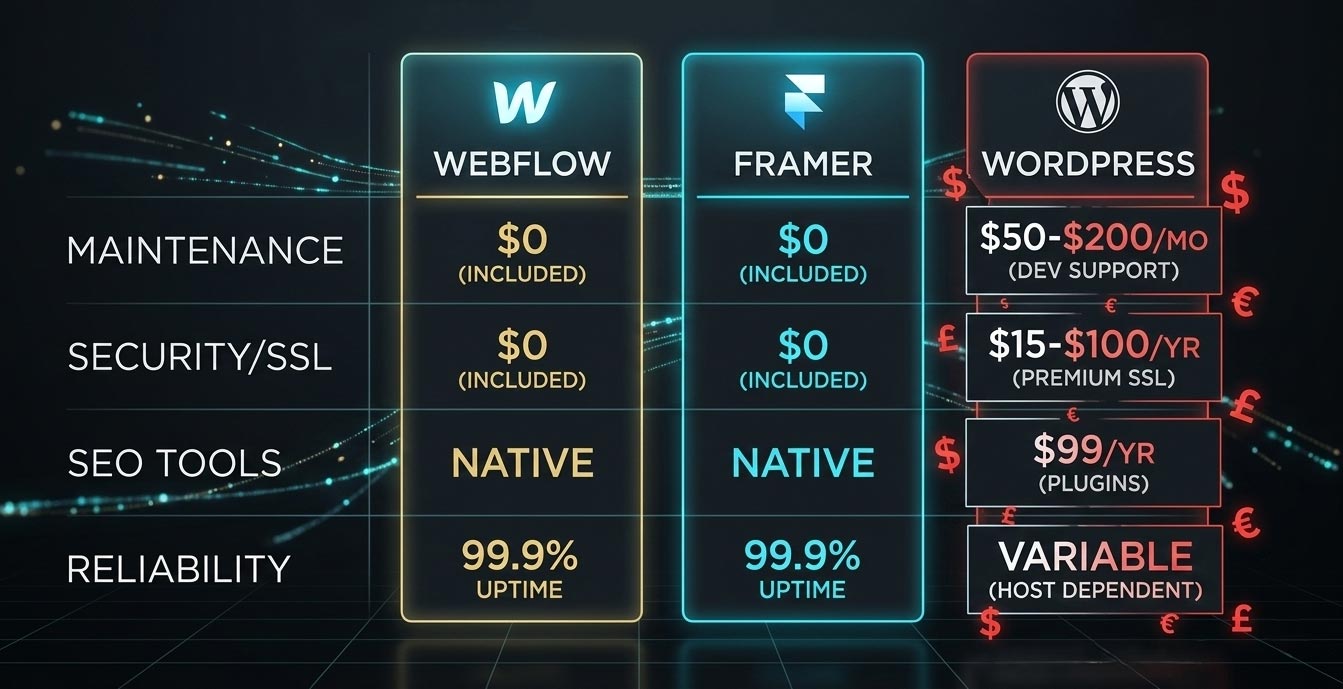
- Maintenance Hell: The "hidden costs" of updating plugins and fixing security breaches can bankrupt a small team’s time.
- Speed Bloat: Without a Strategic Brand Design expert, WordPress sites often become slow and clunky.
- The Choice: Use this for content-heavy news sites or high-volume SEO blogs where "quantity over aesthetic" is the goal.
The "Power Stack" for High-Ticket Brands
A website is just the skeleton. To make it a Brand Strategy and Design powerhouse, you need the right muscles. Here is the stack I recommend for 2026:
- The Lead Engine: I use MailerLight to turn my site traffic into a loyal community.
- The Commerce Wing: For my digital products, I trust Gumroad or Payhip. If you're building a full-scale store, Shopify remains the undisputed king.
- The Content Factory: To keep my Brand Storytelling sharp, I use Eleven Labs for AI-powered voiceovers in my motion reels and KlingAI to bring those visuals into life.
The "Hidden Costs" Comparison (2026 Data)
To help your clients decide, we should include a "Budget Realities" table.
Final Verdict: What should you choose?
If you are Starting Your Own Brand and want to be taken seriously, don't build a "placeholder." Build an asset.
For the clients I work with at my Visual Branding Agency, the answer is almost always Webflow. It’s the only platform that truly bridges the gap between Strategic Brand Design and digital performance.
Ready to build a website that reflects your premium value?
For more Branding, Marketing, Motion and Storytelling, you already in the right place
Written by: Saiid of @saiiddesigns


.svg)